Nice Automobiles, Luxury Car, Luxury Automotive, Elegant Car
Showing posts with label BMW. Show all posts

Tuesday, July 12, 2011

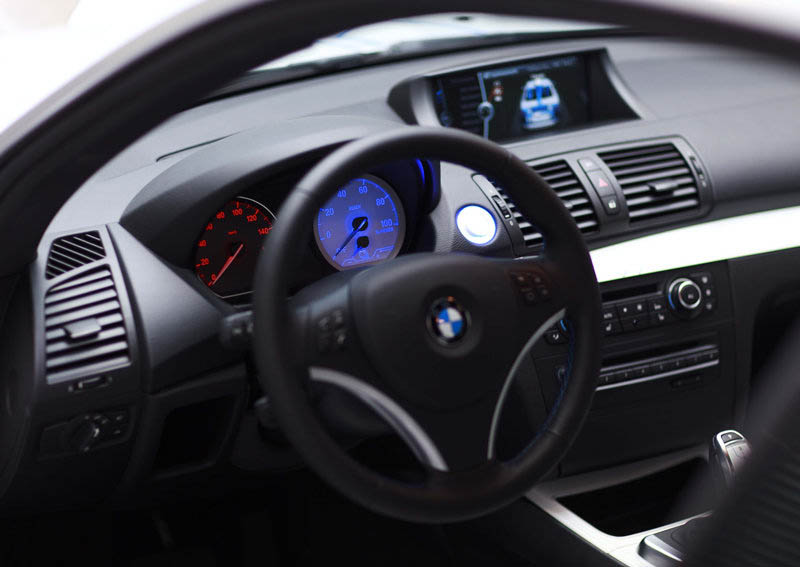
BMW ActiveE Concept, 2010


BMW ActiveE Concept, 2010

Introducing the BMW ActiveE Concept, the latest electric vehicle project under BMW Group's initiative to produce vehicles that explore solutions to minimize environmental impacts while preserving the kinetic driving experience for which BMW has long been known. The BMW ActiveE Concept follows the all-electric MINI E as the second large-scale electric vehicle test program to be conducted in the hands of interested customers.

The BMW Group presents yet another milestone along the way to achieving CO2-free mobility. The BMW ActiveE Concept provides a taste of a purely electrically powered BMW. Focused on the requirements of practical use, the study is based on the BMW 1-Series Coupe and embodies the outstanding agility and characteristic driving pleasure of the BMW 1-Series for the first time as part of an emissions-free drive concept.

With the world premiere of the BMW ActiveE Concept at the 2010 North American International Auto Show (NAIAS) in Detroit, the BMW Group is highlighting the continuation of its research and development activities in the field of electro-mobility. The field tests with the MINI E as part of project i in the US and Europe have already provided important insights into the demands required of future production electric vehicles. As a second step, project i has begun development of a second trial fleet of electric vehicles based on the BMW ActiveE Concept. These vehicles are likewise intended for everyday use by private and select fleet customers as part of a large-scale field test. The insights gathered in the process will be fed into the development of an electrically powered serial production vehicle which the BMW Group will put on the market under a sub-brand of BMW in the first half of the next decade.

The BMW ActiveE Concept has allowed BMW to explore new vehicle packaging solutions and components which will be crucial to the success of the Megacity Vehicle. The intelligent integration of drive components within the existing vehicle package of the BMW 1-Series Coupe offers the opportunity to provide four full-size seats and a luggage compartment with a capacity of 200 litres / 7 cu ft. The motor, specially developed for the model and located in the rear axle, delivers 125 kW/170 hp and provides maximum torque of 250 Nm / 184 lb-ft. It accelerates the vehicle in less than 9 seconds from zero to 100 km/h (0-60 mph in approx. 8.5 seconds).

The electric drive system draws its energy from new, advanced lithium-ion battery pack developed jointly by BMW and the co-operation partner SB LiMotive especially for the BMW ActiveE Concept. They enable a range of approx. 160 kilometres (100 miles) in everyday use. An intelligent battery management system helps achieve this range largely independently of external climatic conditions. Additionally, the charging period required for the lithium-ion batteries is very short. On the European power grid, the battery pack can be fully charged in just 3 hours at a wall box with a current of 50 ampere at 230/240 volts. In North America, using a high-current (32 ampere continuous) residential wall box, the charge time is about 4.5 hours.

Innovative technology for sheer driving pleasure without CO2 emissions.

The BMW ActiveE Concept embodies a whole new dimension of purely electrically powered mobility. The dynamic potential and high torque of the drive system, along with the rear-wheel drive which is a hallmark of the brand, guarantees the characteristic sheer driving pleasure which is typical of BMW - but without any CO2 emissions. An impressive range of functions and a high level of suitability for everyday use are additional features of this concept, which defines electro-mobility in true BMW style.

The BMW Group attaches key importance to electro-mobility in the development of future-oriented vehicle concepts and drive systems as part of its EfficientDynamics strategy. In the medium term, BMW Group is developing innovative vehicle concepts for emissions-free mobility in urban areas. This so-called Megacity Vehicle will also be offered with an electrical drivetrain. The BMW ActiveE Concept represents a further step towards the realization of this concept. Components of the vehicle may be developed further for later integration into the Megacity Vehicle.

Electric drive: emissions-free, powerful and compact.
The BMW ActiveE Concept offers the prospect of characteristic BMW driving pleasure without exhaust emissions. The requirements for electro-mobility with characteristic BMW properties are being created based on ongoing development in the powertrain. The latest outcome is a new synchronous electric motor tailored to the BMW ActiveE Concept. It offers a high level of efficiency, power delivery, and compact construction.

The maximum output of the new electric drive is 125 kW/170 hp. The maximum torque of 250 Nm / 184 lb-ft is available from a standstill as is typical for electric motors. The torque remains available over an unusually broad load range. Unlike asynchronous electric motors, the new power unit provides a relatively high level of torque even at higher engine speeds and road speeds; at increased load the torque is not reduced abruptly but decreases gradually. The torque curve at higher engine speeds is therefore much more similar to the pattern familiar from combustion engines.

The vehicle concept and drive system provide the agility and dynamic acceleration performance which are characteristic of the BMW 1-Series Coupe. Based on realistic simulations, a figure of less than 9 seconds was measured for the sprint from zero to 100 km/h (0-60 miles in 8.5 seconds), with the 60 km/h mark being reached after less than

4.5 seconds. The maximum speed of the vehicle is electronically limited at around 145 km/h or 90 mph.

The innovative character of the electric drive is also reflected in the optimized ratio between engine output and space requirements: the compact power package is fully integrated in the rear axle of the BMW ActiveE Concept. Here the drive system occupies the space required in conventional vehicles by the differential, whose function is integrated in the drive system.

Recuperation of energy increases range.
In the purely electric powered BMW, the driver may control deceleration as well as acceleration through the movement of the accelerator pedal. As soon as the driver's foot is removed from the accelerator, the electric motor performs the function of a generator, converting the vehicle's kinetic energy into electric power and storing it in the battery pack. Intensive use of this so-called energy recuperation process by the motor increases the range by up to 20%.

At the same time, a brake torque is created which results in effective deceleration of the vehicle. This response enables a very comfortable driving style, especially at medium and constantly varying speeds. In urban traffic, some 75 percent of all deceleration manoeuvres are initiated without the need for the brake pedal. During Brake Energy Regeneration function, the vehicle's brake lights are illuminated.

This brake effect acts on the rear wheels only. When the driver requires a higher level of deceleration, stepping on the brake pedal engages the conventional hydraulic braking system. If an emergency braking maneuver is required during braking, the Dynamic Stability Control (DSC) system applies selective braking and motor management measures to ensure that safe braking is always guaranteed.

The brake system is fitted with an electric vacuum pump which is activated on demand. Along with the Electric Power Steering (EPS) familiar from the production models of the BMW 1-Series, these features contribute to an increase in the overall efficiency of the vehicle.

Innovative lithium-ion battery pack with its own liquid cooling.
The lithium-ion battery pack specially developed for this vehicle supplies energy to the motor and all other functions of the BMW ActiveE Concept. The high-voltage battery units offer a particularly high storage capacity and durability. For the first time, storage cells are used which were developed especially for use in automobiles by the BMW Group in collaboration with the co-operation partner SB LiMotive. Powerful battery cells are key when it comes to designing production vehicles with electric drive. Through the collaboration of the BMW Group with a joint venture of the companies Bosch and Samsung SDI [SB LiMotive], leading expertise in the area of battery technology and electro-mobility has been brought together. The aim is to use the best available technology in the area of energy storage as part of the development of the Megacity Vehicle.

For some time now, lithium-ion technology has demonstrated its particularly high storage capacity and deep-cycle resistance - for example in mobile phones and laptops. The technological expertise of SB LiMotive ensures that these properties are retained even under the special conditions of use in an automobile and the relevant demands in terms of durability, endurance and safety.

The lithium-ion batteries of the BMW ActiveE Concept have their own liquid cooling system and intelligent battery management system, which are key elements in increasing both the storage capacity and the durability of the battery cells. These systems also ensure that the long range can be maintained largely independent of external climatic conditions. The high storage capacity is the decisive factor in achieving as long a range as possible. The storage system developed for the BMW ActiveE Concept enables a real-world range of about 160 km / 100 miles on a single charge, depending on conditions (FTP72 cycle range is calculated to be 240 km / 150 miles in simulation).

Modular structure, compact construction, space-saving integration.

Another special feature of the battery pack is its outstanding compactness, despite its output and capacity. The arrangement of battery cells, grouped into several modules, is ideal in terms of packaging, functionality and vehicle balance. The battery pack is located where a combustion engine and fuel tank would normally be located. The largest portion of the battery pack in the BMW ActiveE Concept is located where the conventional propshaft and fuel tank would be in the lower section of the vehicle. In addition, a portion of the battery pack is located where the combustion engine would normally reside. Using intelligent lightweight design and the highly-efficient lithium-ion battery cells, vehicle curb weight is limited to about 1800 kg / 3900 lbs.

Characteristic BMW driving experience, space of a BMW 1-Series Coupe.
The positioning of the battery pack shifts the vehicle's center of gravity downwards. Also, the battery cell layout within the vehicle preserves the near 50-50 weight distribution characteristic of BMW vehicles. In this respect, the BMW ActiveE Concept offers ideal conditions for driving experience characterized by a high level of agility.

In terms of the space available in the interior, the BMW ActiveE Concept has no disadvantage compared to the BMW 1-Series Coupe with conventional combustion engine. It offers four full-size seats with the same measures of head, leg and shoulder space.

The optimum positioning of the power electronics above the motor integrated in the rear axle, for reasons of safety and functionality, results in a reduction of trunk capacity. Nonetheless, the BMW ActiveE Concept still has a luggage compartment which provides considerable versatility in everyday use. With a volume of approx. 200 litres / 7 cu ft, it even exceeds the trunk capacity of the BMW 1-Series Convertible with an open top and can hold two 46-inch golf bags, for example.

BMW X1, 2010


BMW X1, 2010

Its agile, versatile and modern character, the BMW X1 guarantees a new driving experience in the premium compact segment. It expands and enhances the range of BMW X models by yet another innovative vehicle concept.

Through its body design the BMW X1 demonstrates self-confident elegance, a versatile and sporting character, as well as spontaneous agility. For the first time the features and characteristics of a BMW X model are carried over in modern style into a unique vehicle in the premium compact segment.

The interior of the BMW X1 is characterised by clear function and trendsetting, modern style. The driver orientation so typical of BMW is additionally accentuated by the forward-pushing lines within the cockpit area. Sophisticated materials and natural colours accentuate the youthful and dynamic flair of the vehicle.

The elevated seating position, a generous feeling of space, the wide range of storage options and the variable interior offer ideal conditions for enjoying the BMW X1 both in an urban environment and beyond, with agility, spontaneity and versatility of the highest calibre. Three full-sized seats at the rear offer generous space and freedom of movement. The rear-seat backrest is adjustable for angle and folds down in a 40/20/20 split. Luggage compartment capacity may be increased from 420 litres/14.7 cu ft to a maximum of 1,350 litres/47.3 cu ft. An electrically operated Panorama glass roof is available as an option.

The modern drivetrain technology gives the BMW X1 superior performance and supreme efficiency all in one. Depending on the model variant, the driver benefits from powerful, economical and low-emission gasoline and diesel engines, BMW's intelligent xDrive all-wheel-drive technology, as well as a wide range of BMW EfficientDynamics features including Brake Energy Regeneration, Auto Start Stop, and a gearshift point indicator. The BMW X1 sDrive18d with rear-wheel drive and average fuel consumption to the EU standard of 5.2 litres/100 kilometres (equal to 54.3 mpg imp) and a CO2 rating of 136 grams/ kilometre offers the highest standard of efficiency all round.

The cutting-edge suspension technology featured in the BMW X1 comprises a double-joint thrust bar or, respectively, an aluminium double-joint tiebar axle at the front and a five-arm rear axle in lightweight steel, high-precision power steering, high-performance brakes, Dynamic Stability Control including Dynamic Traction Control and, as an option, Performance Control acting on the brakes for particularly dynamic driving behaviour.

The BMW X1 features a special body structure designed from the outset for maximum occupant safety. Standard features include three-point inertia-reel seat belts all round, frontal and side airbags as well as head airbags at the side, adaptive Brake Lights and daytime driving lights. Xenon headlights, Adaptive Headlights and a High-Beam Assistant are all available as an option.

In conjunction with the optional Business and Professional navigation systems, the BMW X1 is equipped with the latest generation of BMW iDrive including a Controller and direct selection buttons on the centre console, a Control Display harmoniously integrated in the instrument panel, and favourite buttons beneath the control panel for the air conditioning featured as standard.

BMW 135i Coupe, 2010


BMW 135i Coupe, 2010

Starting immediately the BMW 135i Coupe and the BMW 135i Convertible come with a straight-six power unit of the latest generation for the first time combining BMW TwinPower Turbo Technology, High Precision Injection and fully variable VALVETRONIC valve management, all interacting with one another to set new standards for economy with the highest level of performance.

In conjunction with the seven-speed double-clutch gearbox (DKG) featuring Sport Automatic available as an option for the first time in the BMW 1-Series as of March 2010, these superior technologies offer a further significant reduction of fuel consumption and emissions on these top-flight performers, setting up new records in acceleration and dynamic performance.

The top engine featured in both versions of the BMW 1-Series develops maximum output of 225 kW/306 hp at 5,800 rpm from a capacity of three litres, combining spontaneous and direct response with unleashed free-revving driving qualities. Peak torque of the six-cylinder is 400 Newton-metres/295 lb-ft delivered from just 1,200 rpm all the way to 5,000 rpm.

The seven-speed double-clutch gearbox with Sport Automatic shifting gears without the slightest interruption in power and torque, is likewise designed and built for dynamic performance of the highest standard.

Sport Automatic offers not just the option to shift gears manually on the electronic gear selector lever or via the shift paddles on the steering wheel, but also the usual comfort and convenience of a BMW automatic transmission.

The combination of these two innovations in a compact car naturally guarantees driving pleasure of a new standard never seen before. Accelerating from 0 - 60 mph in just 5.0 and from 0 - 100 km/h in 5.2 seconds, the BMW 135i Coupe with its double-clutch gearbox offers the same supreme standard as a thoroughbred sports car even more than in the past.

A truly unique achievement in this performance class is average fuel consumption in the EU test cycle of 8.5 litres/100 kilometres (equal to provisional combined of approx. 22 mpg US), almost one litre/100 kilometres better than the comparable figure in the former model with its six-speed automatic transmission.

This significant reduction of fuel consumption, together with acceleration to 60 mph improved once again by 0.2 seconds, clearly confirms the progress made through BMW EfficientDynamics with this new engine and transmission technology.

Saturday, February 6, 2010

BMW EfficientDynamics Concept

BMW EfficientDynamics Concept


The BMW Vision concept car clearly demonstrates that the EfficientDynamics objectives are fully compatible when applied to a sports car. Conceived as a 2+2-seater with plug-in full-hybrid technology, the unique car combines the performance of a BMW M vehicle with a standard of fuel efficiency and emission management that exceeds even the current levels achieved by the latest small cars. The outstanding result is made possible by the combination of BMW ActiveHybrid components with an extremely economical combustion engine, and outstanding aerodynamic qualities.

BMW EfficientDynamics Concept is the result of a "clean-sheet" development process to ensure that the correct achievements were made in the areas of efficiency, driving pleasure, technology, and emotional design. BMW EfficientDynamics Concept is the most comprehensive implementation of the EfficientDynamics philosophy seen so far. The powertrain provides a top speed limited electronically to 155 mph, with acceleration to 100 km/h in 4.8 seconds. Average fuel consumption in the EU test cycle is 3.76 liters/100 kilometers, equal to 62.6 mpg, and the CO2 emission rating is 99 grams per kilometer. CO2 emission management is even more outstanding when driving in the all-electric mode after charging the battery from a plug-in source: Taking all emissions in the generation of electricity into account, as prescribed by the EU formula, the car's emission rating is just 50 grams per kilometer.
BMW EfficientDynamics Concept

The power and performance are made possible by combining a fuel-efficient 3-cylinder turbodiesel with one electric motor on each axle. The intelligent combination of these units, together with precisely controlled energy management, simultaneously enhances the dynamic performance and the efficiency of the car. Overall system output is 356 horsepower, and peak torque is 590 lb-ft. The special arrangement of the two motors and diesel engine allows all-wheel drive when driving in all-electric mode. The result is minimum power loss and a harmonious transmission of the power available under all conditions.

BMW EfficientDynamics Concept for the first time conveys the dynamic look of a BMW sports car to a hybrid vehicle. Developed with decades of experience in Motorsport, the body of this unique sports car is a result of intelligent lightweight technology and aerodynamic efficiency. In the design of the interior, the focus was likewise on both the fascinating driving experience and, in particular, on transparent, hands-on technology and maximum reduction of weight.

Turbodiesel engine with unprecedented specific output.
The combustion engine is a cutting-edge turbodiesel featured for the first time in the BMW EfficientDynamics Concept car. Displacing 1.5 liters on three cylinders, the engine consistently follows the downsizing principle of using a relatively small engine combined with a turbocharger to reduce fuel consumption.

Through its compact dimensions, the 3-cylinder fits conveniently in front of the rear axle like in an agile mid-engine sports car, despite the two seats at the rear. Fuel is injected by the latest generation of High Precision Direct Injection, and the turbocharger features variable intake geometry for maximum efficiency. Engine output is 163 hp with peak torque of 214 lb-ft.

The specific output of 109 hp per liter sets a new benchmark in diesel technology. The power delivered by the turbodiesel is conveyed to the rear axle by means of a double-clutch transmission (DCT). This advanced transmission technology, which already offers a particularly dynamic driving experience in BMW's M3 and Z4 Roadster, allows the driver to shift gears without the slightest interruption of power. BMW EfficientDynamics Concept features a newly-developed version of BMW's DCT with six speeds for maximum efficiency and flexibility.

Two electric motors for full-hybrid drive.
The combustion engine is supplemented by two electric motors. Consistently applying the BMW ActiveHybrid philosophy, development engineers followed the principle of "Best of Hybrid," choosing the optimum combination of a hybrid synchronous motor on the front axle and a full-hybrid system at the rear.

The driver benefits from the efficiency of the electric motors over a far wider speed range than with a conventional hybrid car. The rear axle comes with a second-generation full-hybrid system corresponding to the technology in the BMW ActiveHybrid 7 production model. The compact electric motor positioned between the diesel engine and the DCT outputs a consistent 33 horsepower and is able to reach a peak of up to 51 hp. Maximum torque for the rear electric motor is 214 lb-ft, the power, either supporting the diesel engine or in all-electric motoring.

The engine, a hybrid synchronous motor, offers continuous output of 80 horsepower and peak torque of 162 lb-ft. Extra power of 112 horsepower is available for a period of up to 30 seconds, and, for a 10-second "burst," the electric motor is able to develop 139 horsepower. The power is transmitted through a 2-stage, single-speed reduction gearbox.

BMW EfficientDynamics Concept is able to run completely under electric power, with the power of the turbodiesel engine alone, or through an infinite combination of the three power sources. Depending on driving conditions, the two electric motors may be used both for accelerating and for regenerating energy when applying the brakes and while coasting. This principle ensures efficient energy management, with the charge status of the lithium-polymer battery constantly remaining within the optimum range. When accelerating, the electric motors help to boost the car for even greater performance, ensuring immediate response and a significant reduction in fuel consumption. For a short time, such as in passing maneuvers, the cumulative maximum output of all three engines increases to 356 hp, with maximum torque generated by the three engines reaching 590 lb-ft.

The lithium-polymer battery for electrical energy.

The energy cells featured in BMW EfficientDynamics Concept are housed in a chassis element running from front to rear through the middle of the car. The front unit is the lithium-polymer complex, an ongoing development of the lithium-ion battery. Overall, BMW EfficientDynamics Concept comes with a total of 98 lithium-polymer cells, each offering a capacity of 30 amp/hours and developing continuous output of 600 Amps at a voltage of 3.7 V. For a period of 30 seconds, each cell is even able to develop maximum output of 1,200 Amps.

The serial arrangement of the lithium-polymer cells serves to generate nominal voltage of 364 volts, the gross storage capacity of the battery is 10.8 kW/h. With an unusually high discharge capacity of 80 percent, the battery delivers 8.6 kW/h for driving the car. This superior performance comes on overall weight of the entire energy storage system of just 187 lb. A further advantage is that through their optimum dimensions tailored to the specific qualities and features of the car, the lithium-polymer cells, together with the operating strategy chosen with a concept of "forward looking" energy management, reduces the thermal load acting on the battery to such an extent that there is no need for active cooling.

The Plug-in solution: convenient charging of the electric power system from a conventional power socket.

Brake Energy Regeneration captures electric power generated while driving without additional fuel consumption, which is subsequently used to supply power to the electric motors and on-board network. A further option is to connect the lithium-polymer cells to a conventional power socket for a simple and efficient charge process, using a plug-in connector in the front-right wing of the car. Connected to a standard EU power outlet (220 V, 16 Amps), the system requires a maximum of 2 ½ hours to fully charge the lithium-polymer cells. And wherever a power source with higher voltage and amperage (380 V, 32 Amps) is available, the charge time is an even shorter 44 minutes.

The Fuel efficiency and emission management opening new dimensions in hybrid technology.

The power delivered by the two electric motors and single diesel 3-cylinder engine gives the BMW EfficientDynamics Concept a level of performance superior to anything provided so far by a hybrid vehicle. Acceleration from a standstill to 100 km/h, for example, comes in just 4.8 seconds and the car could exceed its electronically-limited 155 mph top speed.

As a plug-in hybrid, BMW EfficientDynamics Concept is able to cover the entire drive cycle for measuring fuel consumption also with its combustion engine completely switched off. Then, to subsequently charge the lithium-polymer cells to the same status as when setting off, all the driver has to do is connect the car to an external power grid. To determine the consumption of electric power, the only requirement is to compare the charge level of the battery before and after the test cycle. Applying this measurement process, the BMW EfficientDynamics Concept car consumes 17.5 kW/h per 100 kilometers, equal to a CO2 emission rating of just 50 grams per kilometer in the EU test cycle.

To determine the total volume of CO2 emissions when driving in the all-electric mode, new legal standards for measuring the level of fuel consumption are currently being prepared for hybrid and electric cars with a plug-in power supply. Applying this calculation method, the CO2 emission ratings generated by BMW EfficientDynamics Concept are reduced further to just one-third of the original figure of 99 grams per kilometer. Clearly, this significant reduction of emissions opens up a new dimension in BMW's EfficientDynamics development strategy in this unique concept car.

Aerodynamic qualities reflecting BMW's Motorsport experience.

BMW EfficientDynamics Concept also takes a new approach in its design and streamlining, the body and the interior clearly expressing the unique combination of supreme efficiency and the sporting performance of the brand. Following BMW's design language, this concept car visualizes both highly efficient aerodynamics and intelligent lightweight construction.

In its design, BMW EfficientDynamics Concept differs from the usual low-emission car concepts. The principle of "form follows function" is not just for the overall look of the car, but embraces each and every detail. Measuring 48.8" in height and boasting a sweeping, arch-like roofline, BMW EfficientDynamics Concept offers the slender silhouette of a classic Gran Turismo. With the combustion engine fitted in front of the rear axle, the designers have succeeded in giving the car a very low front end, with the flow of air being further smoothened by active louvers in front of the radiator, which close completely when the need for cooling air is low. This efficient function follows in the footsteps of the active air flap control already used as a feature of BMW EfficientDynamics in some of BMW's current production models. As a further highlight, BMW EfficientDynamics Concept guides air smoothly and exactly as required into the car through an active air intake at the front.

Overall vehicle concept for a drag coefficient of just 0.22.
To further optimize the aerodynamic qualities of the entire vehicle and keep rolling resistance to a minimum, BMW EfficientDynamics Concept comes with tires and wheels of quite unusual size on a sports car. The tires measure 195/55, while large 21-inch wheels provide a contact surface on the road otherwise offered only by a much wider tire. In combination with the sophisticated axle geometry, this ensures agile driving behavior.

The extra-large wheel covers extending over part of the tire flanks add to the unique, very different look of BMW EfficientDynamics Concept from the side. The blade profile integrated in the wheels serves furthermore to reduce the negative effect of the turning wheels on the overall aerodynamics of the car. In all, these features optimizing the aerodynamic qualities of the car give the BMW EfficientDynamics Concept car a very low drag factor (CX) of just 0.22.

Technological look as a strong impression of intelligent lightweight construction.
In both exterior and interior design, BMW EfficientDynamics Concept stands out clearly as a strong spearhead in technology. Many components of the vehicle are presented in full view expressing the "transparent" character of the car as a powerful visual feature of lightweight technology. The chassis and suspension of BMW EfficientDynamics Concept are made completely of aluminum; the roof and the outer skin on the doors are made almost completely of a special polycarbonate glass automatically darkening as a function of the light shining on the car.

Carrying a maximum payload of 981 lb, this unique 2+2-seater is fully suited for everyday traffic. Luggage capacity of 5.3 cu ft, in turn, allows the driver and passengers to conveniently take along two golf bags. And to meet additional loading requirements the backrests of the two rear seats may be tilted down individually to provide extra storage space.

Emotional design through sculptural shapes and layering technology.
Reflecting the innovative drive concept of this unique car, the design of BMW EfficientDynamics Concept likewise takes a new approach in combining functional progress with a most powerful emotional impact.

This has been achieved through the close cooperation of BMW's Design and Technical Development Divisions starting at an early point and continuing consistently throughout the entire development process. The result is a brand-new vehicle architecture with the drive components as well as the body and interior elements perfectly coordinated and matched to one another with maximum flexibility and individual style.

Layering technology developed by the BMW Group Design Division acts as the fundamental guideline in designing the exterior and interior. Applied for the first time in exterior design, this technology layers one surface on top of the other, creating very smooth seams and joints to reduce the number of components and, accordingly, the weight of the car. As a result, BMW EfficientDynamics Concept meets the most demanding aerodynamic requirements without using any additional body elements, simply through the structure of the surfaces optimized for a smooth flow of air.

Interior: innovative lightweight construction and unprecedented orientation to the driver.

Innovative layering technology provides an unprecedented symbiosis of function and stylish shapes intentionally reduced to a minimum, consistently implementing and visualizing the lightweight principle also inside the car.

Specific components such as the central air vent not only serving to enhance motoring comfort but also acting as part of the cockpit, perform several functions in one. This multi-functionality is then presented visibly within the car, the use of particularly sophisticated materials providing a highly attractive combination of innovation in technology and quality clear to the eye and the touch of the surface.

The instrument panel is deliberately padded only where technical components have to be appropriately covered, thus making an important contribution to passenger safety in the event of a collision. The instrument cluster played a fundamental role right from the start in the design process, serving as the starting point for all surfaces within the interior and thus creating a particularly powerful rendition of that driver orientation typical of BMW.

Innovative light technology: providing clear signals to the outside and offering soothing ambient illumination inside in a unique symbiosis.

LED lights at both the front and rear end of BMW EfficientDynamics Concept provide an innovative combination of the symbols typical of the brand and clear design language oriented towards trendsetting technology. The distinctive look of the dual round headlights characteristic of a BMW is emphasized in particular by the use of LED technology. The rear lights are integrated also in their function into the design of the entire rear section, forming part of the rear air deflector and thus merging completely into the rear contour.

Extremely flat and compact, the rear lights are made up of innovative LED units forming a smooth and consistent red surface when not in use. Only when used do the respective light chambers take on the appropriate color such as yellow on the direction indicators. This innovative light technology also provides an intense symbiosis of the exterior and interior, again promoting and further refining the driving experience.

Overhead doors for convenient access to all seats.
The doors on BMW EfficientDynamics Concept open up like bird's wings, turning on pivots in the front roof column at the level of the side direction indicators. Since the car has no B-pillars, the large door cutouts ensure convenient entry also to the rear seats. The pivots on the doors also provide the base for the exterior mirrors, thus forming an ideal combination of function and aesthetic design. The structure of the doors is also characterized by several layers of materials on top of one another and the optical and functional symbiosis of the interior and exterior this technology is able to offer. Made up of three layers, the overall structure comprises the outer glass surface, an interim load-bearing layer, and the interior cover with its particularly smooth shapes and fl owing forms clearly visible to the passengers, layering technology again, therefore, opening up new perspectives.

The large glass surfaces extending far down on the body also provide a strong optical impression of the low seating position close to the road. And at the same time a stable sidebar ensures the body stiffness and crash safety naturally required on every vehicle. Flowing to the inside at its central point, this safety element also serves as an armrest. This interplay of the three layers also helping to minimize the weight of the car continues on the trim bar running along the door and extending out of the armrest, finally flowing into the outer door opener on its path from inside to outside.


Saturday, September 5, 2009

BMW X6

BMW X6 UK Version

In 1999 BMW broke the four-wheel-drive mould when it launched the X5 Sports Activity Vehicle. With a bias towards excellent on-road performance combined with a dynamic design and a premium interior, the BMW X5 was an instant success. And it's a winning formula that has, unlike most other models, led to increasing sales during its lifecycle with the biggest annual UK sales coming in its penultimate year. The timing of the BMW X5 was perfect and it reflected buyers' lifestyles and their desire for something unique in the marketplace.
The BMW X6 is a bespoke proposition, but one that competitors look set to copy…just like the BMW X5.

The concept of the new BMW X6 is best considered in relation to the link between the BMW 3 Series Saloon, Touring, Coupé and Convertible. People buy all four versions of the 3 Series depending on their circumstances and needs. The same will be the case for the BMW X6 compared to other BMW X models.

The BMW X6 UK Version

The BMW X6 is undeniably a niche car with BMW UK expecting to sell approximately 1,600 X6s in its first year - by comparison an average of 7,000 X5s are sold every year. Research has shown that three key buyer profiles exist:

A quartet of turbocharged engines

For the first time in BMW's history a model range has been launched solely powered by turbocharged engines. The BMW X6 xDrive35i is powered by the twin-turbocharged 2007 and 2008 International Engine of the Year winner that produces 306hp. This powerplant is capable of propelling the X6 xDrive35i from zero to 62mph in 6.7 seconds and on to a top speed of 149mph. The 2,979cc-engined X6 is still capable of achieving a combined 25.9mpg and a CO2 figure of 262g/km.

The BMW X6 xDrive30d and the BMW X6 xDrive35d also both have award-winning powerplants under their bonnets. The former, a single turbocharged unit produces 235hp from its 2,993cc block, while the latter ups the ante by offering 286hp from the same capacity engine but aided by twin-turbochargers.

The BMW X6 xDrive30d, which is likely to become the biggest selling X6 variant over time, reaches 62mph from zero in 8.0 seconds before going on to a top speed of 137mph. Emissions and economy figures are equally impressive, recording 217g/km and 34.4mpg respectively. The low CO2 output is enough for the car to qualify for a lower Vehicle Excise Duty band, compared to rival products, and continue to be an £8-a-day Congestion Charge vehicle in London should current proposals become statute.

The BMW X6 xDrive35d sprints from zero to 62mph in 6.9 seconds before going on to a top speed of 147mph. It too sits under the 225g/km higher Vehicle Excise Duty and Congestion Charge strata. The twin-turbocharged diesel records an emissions figure of 220g/km, while also being capable of 34.0mpg.

Completing the awesome foursome of powerplants is a new twin-turbocharged, high-precision direct injection, 4.4-litre V8 engine producing 408hp. This all-new engine, not seen in any other BMW product before, is the most powerful production non-M BMW V8 engine ever and makes the flagship X6 the most powerful production X product. It can reach 62mph from standstill in 5.4 seconds - quicker than a Porsche Boxster - before going on to an electronically-limited top speed of 155mph.

Brake Energy Regeneration is standard across the range and combines with active aerodynamics and low viscosity fluids in the steering and transmission systems. Third-generation common-rail technology diesel-engined cars and high-precision direct injection on the petrol models both serve to optimise the combustion process.

A new high in dynamic capability

The power of the BMW X6 is harnessed by an advanced chassis that incorporates Dynamic Performance Control for the first time on a BMW. Dynamic Performance Control offers drivers class-leading cornering ability courtesy of a complex multi-clutch differential that, effectively, helps drive the vehicle around a bend.

A conventional differential wastes power through wheelslip during cornering. A limited-slip differential locks out an unloaded wheel to transfer drive to the wheel with most grip - but the locked wheel can act as a drag on performance. However, Dynamic Performance Control improves on the traditional, performance oriented limited-slip differential. It allows an inside wheel to still deliver power and provide drive, while at the same time sending more drive to the outside wheel that has more grip. The result, combined with one of the most advanced stability control systems available, is a vehicle that out performs the current benchmark BMW X5 and some sports cars in terms of dynamic capability.


Saturday, March 21, 2009

BMW Z4

BMW Z4

The latest in BMW's long and successful roadster family has been revealed. The all-new BMW Z4 will go on sale in the UK in May 2009 and features a host of innovations never before showcased during BMW's 75 years of roadster heritage.
The BMW Z4 is the first to come with a two-piece, electro-hydraulically operated Retractable Hard-Top roof that can be raised or lowered in 20 seconds. The new roadster is also the first vehicle to be offered with Adaptive M Suspension. Electronically controlled dampers offer three different configurations and lower the ride height by up to 10mm for a more dynamic drive. By way of comparison, the Sport+ setting of the new car is comparable to the outgoing Z4's standard ride comfort level.

The standard Drive Dynamic Control function is another first and allows the driver to alter, depending on model specification, the throttle and steering response, level of ride comfort, Dynamic Stability Control response and, on automatic or Double Clutch Transmission cars, gear change times.

Powering the new BMW Z4 is a choice of three six-cylinder powerplants. The range flagship is the current International Engine of the Year-winning 3.0-litre twin-turbocharged engine. Producing 306hp at 5,800rpm, the BMW Z4 sDrive35i powers its way from zero to 62mph in 5.2 seconds (5.1 seconds for a Double Clutch Transmission-equipped car) and on to an electronically-limited top speed of 155mph. The twin-turbocharged 2,979cc engine with high-precision direct injection technology produces 400Nm of torque from just 1,300rpm for effortless in-gear acceleration. The strong performance credentials are matched in terms of economy and emissions. The Z4 sDrive35i records a combined consumption figure of 30.1mpg (31.4mpg) and CO2 emissions of 219g/km (210g/km).
Joining this model in the launch line-up are the Z4 sDrive23i and the Z4 sDrive30i. Both use the same magnesium aluminium alloy engine with Double VANOS and VALVETRONIC technology, but with varying capacities. The 2,497cc entry-level Z4 sDrive23i produces 204hp at 6,400rpm and 250Nm of torque from 2,750rpm. This equates to a zero to 62mph time of 6.6 seconds (7.3 seconds for the Sport Automatic) and a top speed of 151mph (149mph). In contrast the Z4 sDrive23i is capable of 33.2mpg (34.4mpg) on the combined cycle and CO2 emissions of 199g/km (192g/km) respectively.

All three six-cylinder powerplants surpass the latest strict EU5 emissions standards.
The BMW Z4 sDrive30i comes with a 2,996cc powerplant offering 258hp at 6,600rpm and 310Nm of torque from 2,600rpm. The six-cylinder engine records a zero to 62mph time of 5.8 seconds (6.1 seconds for the Sports Automatic) and an electronically-limited top speed of 155mph. Like the Z4 sDrive23i, the Z4 sDrive30i posts impressive combined consumption and CO2 emissions figures, recording 33.2mpg (34.0mpg) and 199g/km (195g/km). Transmitting the power to the road in all three Z4s is a six-speed manual gearbox as standard. Customers of the Z4 sDrive23i and the Z4 sDrive30i who prefer the characteristics of an automatic can specify a six-speed Sport Automatic transmission featuring gear change paddles on the steering wheel. Buyers of the Z4 sDrive35i can choose the more advanced seven-speed Double Clutch Transmission, again with gear shift paddles located on the steering wheel.

EfficientDynamics
All of the latest BMW Z4s come as standard with facets of BMW's award-winning EfficientDynamics programme. Technologies that improve engine performance while enhancing economy and cutting emissions include Brake Energy Regeneration, Electric Power Steering with Servotronic, Reduced Rolling Resistance Tyres, on-demand control of the engine's ancillaries and Optimum Shift Indicator on manual transmission cars. The BMW Z4 also adheres to a philosophy of lightweight construction with the front suspension and subframe being largely made from aluminium.

Enhanced packaging
The new BMW Z4 is larger than its predecessor measuring 148mm longer at 4,239mm and 9mm wider at 1,790mm, and this results in greater interior space and luggage capacity. With the roof up, headroom has been increased by 44mm while the greater car width and design enhancements have led to 20mm more shoulder room and 43mm more elbow room.
For the first time on a BMW Z4 there is a bespoke storage facility located behind the driver and passenger seats. This approximate 15.5-litre single compartment stretches the width of the car's interior and features netting to hold the contents in place. It can be complemented by an optional Storage Package that adds further stowage capacity. BMW's latest generation of iDrive makes its first appearance on a Z4. The BMW Professional Multimedia Navigation system features a hard disc drive capable of 12Gb of audio file storage and BMW ConnectedDrive functionality. The system also comes with eight programmable Favourite buttons as system shortcuts.
The unique roof construction of the BMW Z4 creates a boot that varies in capacity from 180 to 310 litres - large enough to stow a full set of golf clubs. For the first time on a BMW Z4 customers can specify a through-loading system for additional storage capability. A hatch between the two seats permits a second full set of golf clubs to be carried.
Driver visibility in the BMW Z4 has also been improved. All round visibility is up by 14 per cent while, courtesy of the four electric windows creating a larger glasshouse, side visibility is up 40 per cent. The Retractable Hard-Top roof features a glass rear window and this too improves visibility by 52 per cent.

Technical specifications
* BMW Z4 sDrive23i
o Power: 204 hp
o Torque: 250 Nm
o 0-100 km/h: 6.6 s
o Top Speed: 243 km/h
o Fuel Consumption: 33.2 mpg
o CO2 Emissions: 199 g/km
o Price: 35,900 EUR
* BMW Z4 sDrive30i
o Power: 258 hp
o Torque: 310 Nm
o 0-100 km/h: 5.8 s
o Top Speed: 250 km/h
o Fuel Consumption: 33.2 mpg
o CO2 Emissions: 199 g/km
o Price: 42,900 EUR
* BMW Z4 sDrive35i
o Power: 306 hp
o Torque: 400 Nm
o 0-100 km/h: 5.2 s
o Top Speed: 250 km/h
o Fuel Consumption: 30.1 mpg
o CO2 Emissions: 210 g/km
o Price: 47,450 EUR