Nice Automobiles, Luxury Car, Luxury Automotive, Elegant Car
Showing posts with label 2010. Show all posts

Thursday, October 20, 2011

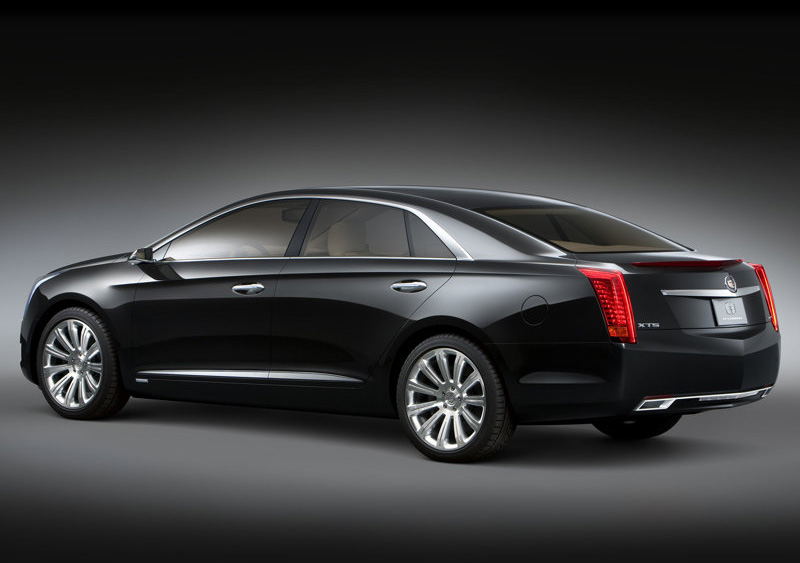
Cadillac XTS Platinum Concept, 2010


Cadillac XTS Platinum Concept, 2010

The Cadillac XTS Platinum Concept was designed from the inside out, re-imagining the luxury sedan as a personal headquarters, built for efficiency, luxury and connectivity. The concept introduces a new approach to in-car electronics that improves the form and function of the car's entertainment, navigation and information systems.

The Cadillac XTS Platinum Concept uses Cadillac's 3.6L V-6 Direct Injection gas engine, paired with a plug-in hybrid system. The plug-in technology enables the battery to fully charge from a standard electrical outlet, enabling pure electric propulsion in many driving situations, especially urban commutes in which fuel efficiency may double that of a conventional hybrid.

Traditional luxury sedans were defined by elegant interiors and Cadillac XTS Platinum Concept propels that formula into the future. It delivers new approaches to luxury within a design that combines fine craftsmanship with customer-driven innovation. Like the current Platinum Edition products, such as Escalade Platinum and the STS and DTS Platinum sedans, the interior is based on hand cut-and-sewn materials. The Cadillac XTS Platinum Concept injects more contemporary forms and themes into the interior design, including the use of Organic Light-Emitting Diode (O-LED) displays in place of traditional gauges and screens.

The concept previews a new integration philosophy guiding the development of future models with respect to in-car electronics. The intent is to progress Cadillac's intuitive in-car electronics systems, typified by the deployable touch-screen navigation system that has been highly acclaimed in the brand's CTS and SRX product lines. The Cadillac XTS Platinum Concept previews this strategy via the minimization of traditional buttons and switches. Designers blended the display screens into a flowing instrument panel. They call it a "dead front" design, because the panels appear black until the car is turned on and the screens illuminate. The instrument panel itself reflects the Cadillac XTS Platinum's other focus - uncompromising luxury and attention to detail on the interior.

The interior takes inspiration from nature, specifically the intricate layers of petals that combine to form an orchid. Cadillac designers translated that into a layered and detailed interior. Light cream is the cabin's primary color and is contrasted with darker elements, such as the steering wheel and an overhead console motif that runs the length of interior's roof. The console is made of a richly finished wood and houses lighting features.

Leather seats include a new style of automotive suede, with a laser-etched pattern. The patterned material adorns the center sections of the seats and accents the door trim. Thoughtfully detailed stitching is used throughout the interior, including the seats, instrument panel and door panels. Passengers in the spacious rear compartment of the Cadillac XTS Platinum Concept also have access to the car's connectivity feature, along with a range of infotainment choices.

A new proportion
The Cadillac XTS Platinum Concept has a distinctive proportion that transcends the traditional aesthetic of luxury sedans and carries the brand's Art and Science design in a more progressive manner. The unique proportion supports the "inside out" design priority, while creating a sleek profile that complements the car's advanced technology elements and necessary aerodynamics.

A sweeping profile culminates in a short, high deck lid that meets the Cadillac XTS Platinum Concept's aerodynamic needs - including a rear spoiler mounted on the deck lid, incorporating the center high-mounted stop lamp. A high, sloping beltline gestures the vehicle forward, suggesting motion, while the fenders flare outward wrapping tightly around 20-inch wheels and tires. The wheel-to-body proportion was carefully tailored to visually communicate the car's all-wheel-drive chassis.

The exterior elements are precisely tailored and elegantly detailed. Brushed billet aluminum trim is used selectively and the 20-inch, 11-spoke wheels feature a brushed aluminum face accented with bright inserts within the spokes. The wheels are wrapped with special Bridgestone tires that were created specifically for the Cadillac XTS Platinum Concept.

Signature elements essential to Cadillac's Art and Science design language include vertical headlamp and taillamps, with integrated light pipes and richly detailed lighting components. The headlamps feature light-emitting diode technology for bright illumination that requires less energy, as well as Cadillac's Adaptive Forward Lighting technology, which turns the headlamps with the direction of the front wheels for greater visibility in turns.

Purposeful and efficient performance
The Cadillac XTS Platinum concept's plug-in hybrid electric propulsion system (PHEV) builds on the experience Cadillac has gained with the Escalade Hybrid and Escalade Platinum Hybrid flagship models. The plug-in capability boosts the car's electric-only driving capability, offering additional battery energy capacity and enabling it to recharge from a standard external electrical outlet. The key benefit of external plug-in recharging is that in many situations - such as overnight parking - the battery can fully recharge in roughly five hours while the car is not in use. The plug-in system operates at maximum efficiency when operating on power the battery has drawn from the electric grid. In some conditions, such as urban commutes, drivers can experience efficiency that doubles that of conventional hybrids.

At higher speeds or when conditions demand it, such as brisk acceleration, a combination of engine power and electric power or engine power only, propels the vehicle. The combination of the Direct Injection V-6 engine and the PHEV system featuring fully electric variable drive provides a spirited driving experience. The system provides an estimated 350 horsepower (260 kW) and 295 lb.-ft. of torque (400 Nm).

Magnetic Ride Control (MRC) enables the Cadillac XTS Platinum Concept to deliver superior road-holding performance while maintaining luxury car composure in "regular" driving conditions. It uses shocks controlled by advanced magneto-rheological technology, rather than mechanical valves, to greatly accelerate response time and precision.
MRC uses electronic sensors at all four wheels to literally "read the road" every millisecond, making constant adjustments to damping to create virtually instantaneous and extremely precise control of body motions.

An advanced, specially calibrated all-wheel-drive system ensures optimal traction in wet and slippery conditions, and helps deliver maximum traction while cornering. Four-wheel disc brakes, with four-channel ABS, StabiliTrak stability control and full-function traction control complete the drivetrain details.

SPECIFICATIONS
  •  Vehicle type: luxury sedan concept
  •  Wheelbase: 111.7" / 2837 mm
  •  Length: 203.5" / 5170 mm
  •  Width: 74.8" / 1900 mm
  •  Height: 59.1" / 1500 mm
  •  Track:
          o front: 62.6" / 1589 mm
          o rear: 62.8" / 1594 mm
  •  Powertrain: plug-in hybrid system with 3.6L Direct Injection gas engine (with variable valve timing); lithium ion battery
  •  Suspension: four-wheel independent with Magnetic Ride Control.
  •  Brakes: four-wheel disc with electric park brake system
  •  Wheels: 20"
  •  Estimated power: 350 hp (260 kW) / 295 lb.-ft. (400 Nm)

Cadillac SRX, 2010


Cadillac SRX, 2010

The Cadillac unveiled the next-generation 2010 Cadillac SRX Crossover, featuring a completely new design and more-efficient, high-technology engine choices. The new Cadillac SRX is a mid-sized luxury crossover.

The 2010 Cadillac SRX is designed for efficient performance, including the choice of two high-tech six-cylinder engines that are new to Cadillac. A new, 3.0L direct injected and E85 capable V6 engine is standard and a new, 2.8L turbocharged V6 is optional. Both engines employ technology that helps produce strong performance that is typical of larger-displacement engines. Direct injection enables a 25-percent reduction in hydrocarbon emissions. Fuel economy in the mid-20s on the highway is expected, but testing isn't yet complete.

The performance and safety are enhanced by an available all-wheel-drive (AWD) system that is designed to optimize vehicle handling and stability in all driving conditions. The AWD system includes an advanced electronic limited-slip differential (eLSD) that distributes torque as needed from side-to-side along the rear axle, in addition from the front to rear axle. The pre-emptive, active-on-demand system provides an extra measure of capability in wet or icy conditions.
The 2010 SRX rides on a wide track that was designed to deliver a nimble, responsive driving experience. It seats five, with generous occupant and cargo room, and can tow up to 3,500 pounds (1,587 kg).

Distinctive design and craftsmanship
A multi-piece shield grille and Cadillac's iconic vertical headlamps - with light pipe technology and available adaptive forward lighting - are the face of the Cadillac SRX. They blend into a tightly wrapped, sweeping body that tapers downward at the rear, giving the vehicle a sporty profile, Dean said.

The Cadillac SRX features a wide stance, minimal overhang and wheels pushed to corners. Eighteen-inch wheels are standard and 20-inch wheels are offered. A bold accent line dives across the body side and culminates at a chrome front fender vent that incorporates a side marker lamp. An integrated spoiler on the rearward edge of the roof extends the sleek lines and improves aerodynamics.
An integrated center stack houses controls for climate and audio systems, while the navigation system rises from the center of the instrument panel. A signature example of the SRX's attention to detail is the Cadillac script logos in the front door sill plates that illuminate when the doors are opened.

Advanced technology and entertainment systems
The 2010 Cadillac SRX features numerous advanced electronic features. Highlights include a "pop-up" navigation screen featuring 3D imaging; adaptive forward lighting that swivels the headlamps in synch with vehicle steering; power liftgate with adjustable height setting; integrated hard disc drive for audio storage and a dual-screen system for rear entertainment.
Bluetooth compatibility is standard, as is OnStar's turn-by-turn navigation service for buyers who do not select the car's navigation system option.

Efficient performance
The Cadillac SRX is powered by a new, fuel-efficient direct injected 3.0L V6 that delivers an estimated 260 horsepower (193 kW) and is paired with a six-speed automatic transmission. Direct injection results in more power, better fuel economy and lower emissions, all will a smaller-displacement package. As a result, the new V6 engine is expected to raise the SRX's standard power rating by 5 horsepower, while achieving an estimated 10-q5-percent fuel economy improvement.

The 3.0L direct injection V6 is a smaller-displacement version of the 3.6L, direct injection engine featured in the Cadillac CTS sport sedan and named one of the world's 10 Best Engines for 2009 by Ward's Automotive. Along with direct injection technology, the 3.0-liter engine employs variable valve timing to optimize power and fuel efficiency and reduce emissions.
The Hydra-Matic 6T70 six-speed automatic transmission helps save fuel by lowering the engine's revolutions per minute at constant highway speeds, while a manual shift lever control enables greater driver interaction when desired. The new Cadillac SRX includes a driver-selectable "eco mode" that alters transmission shift points to maximize fuel economy.

The traction control is taken a step further on AWD models with the rear eLSD. In icy or wet conditions, the system can transfer up to 100 percent of torque to the wheel that has more grip. The eLSD also gives the driver enhanced control when cornering hard or completing a high-speed maneuver, such as a lane change, by momentarily applying more or less torque to either of the wheels to help the rear of the vehicle more closely follow the direction of the front wheels.
The suspension includes a real-time damping system in conjunction with AWD that adjusts shock damping rates in response to road conditions for smooth ride quality.

Enhanced safety
Cadillac SRX's safety features are designed to protect occupants before, during and after a crash. A strong body structure and chassis that absorbs crash energy is complemented by the use of martensitic steel in the fully enclosed rocker sections. Martensitic steel is one of the strongest available and its use in the rockers helps protect against intrusion during a side-impact crash, while also maintaining the structure during front and rear crashes.

Safety features include standard head curtain side airbags, standard front seat-mounted pelvic/thorax side airbags, front safety belts with dual pretensioners and load limiters, rollover mitigation sensors, a pedal release system, trailer stability assist and OnStar.
The Cadillac SRX was also designed to meet European pedestrian protection standards; and the front bumper is positioned for greater compatibility with car bumpers.

Cadillac SLS, 2010


Cadillac SLS, 2010

The new SLS is the next generation of Cadillac SLS luxury business sedan that was first introduced in China in 2006. It combines the American luxury brand's traditional elegance with cutting-edge technologies and is specifically tailored for business elites. It is the first model from Shanghai GM equipped with OnStar.

The new Cadillac SLS comes in four variants that are priced between RMB 448,000 and RMB 698,000.

Choice of Fuel-Efficient SIDI Engines
The new Cadillac SLS comes with a choice of two new world-class Direct Injection engines mated to a six-speed automatic-manual transmission. The 3.0-liter SIDI engine offers 272 horsepower with 300 Nm of torque, while the 3.6-liter SIDI engine generates maximum power of 310 horsepower and 374 Nm of torque. In addition to providing impressive power, the engines reduce fuel consumption by 9 percent and generate lower hydrocarbon emissions compared to similar powerplants.

On Star Safety, Security and Information Service
The new SLS features GM's OnStar in-vehicle safety, security and information service, which goes live in China in early December. With the press of a button, Cadillac SLS owners will instantaneously become connected with the OnStar Call Center for service 24 hours per day/365 days per year.

On Star will initially offer 14 services: Automatic Crash Response, Emergency Services, Automatic Air Bag Deployment Response, OnStar Vehicle Diagnostics, On-Demand Diagnostics, Good Samaritan, Stolen Vehicle Location, Remote Door Unlock, Remote Horn and Lights, Roadside Assistance, Hands-Free Calling, Point of Interest, Turn-by-Turn Navigation and Destination Download.

Redesigned Exterior
The exterior design of the new Cadillac SLS follows the evolutionary styling of the Cadillac brand. The vehicle has a simple look with a well-proportioned, dynamic body. It has been thoroughly redesigned, giving it a more energetic and younger appearance.
Diamond-cut-like design elements appear in the new shield-shaped grille, headlights and tail lights, fog lights, turn signals and side skirts on the fender, adding to the luxury appearance.

The new SLS has a wheelbase that extends beyond 3,000 mm. Together with its wide doors, this provides greater convenience and roominess for passengers.

The Cadillac SLS comes in a choice of five body colors: Black, Titanium Silver, Golden, Space Gray and Platinum Gray. In addition, Shanghai GM offers a choice of two interior colors: Champagne and Ebony.

Finely Crafted Interior
Fine craftsmanship defines the interior of the new Cadillac SLS. Genuine leather is applied throughout the interior, accentuating the elegance and luxury of the new Cadillac SLS. The "cut and sew" technique ensures the highest quality. The cabin also makes liberal use of Sapele Pammele, a wood that is normally used for crafting violins. The 360-degree wrap-around lights in the Cadillac SLS give the interior a luxurious look at night.

All seats are ergonomically designed and wrapped with leather. The front seats feature 8-way power adjusted with four-way lumbar support. The rear seats are power adjusted with 4-way lumbar support, and heated, ventilated and the unique massages function.
The Cadillac has adopted a range of noise, vibration and harshness (NVH) engineering advances to keep noise out of the cockpit for a quiet and pleasant driving experience.

The new Cadillac SLS is equipped with a number of hi-tech amenities, including high-precision three-phase independently controlled air conditioning with temperature memory function; the Air Quality System (AQS), which automatically switches between air quality detection and inside circulation; an available independent three-screen entertainment system with six-disc DVD/CD and TV function; and the BOSE 5.1 acoustic system with 15 hi-fi speakers. In addition, the new SLS is equipped with an intelligent navigation system, remote engine start and a host of other functions to provide a unique and luxurious experience to owners.

Human-Oriented Safety Technologies
The new Cadillac SLS, which was put through extensive road testing in North America, offers a high level of active and passive safety.
More than 80 percent of the body of the Cadillac SLS uses high-strength steel plate. The hydraulic anti-collision column shrinks while absorbing energy in the event of a crash for the safety of all passengers.

Individual front and rear-suspension systems with Cadillac's MRC (MagneRide) Electromagnetism Active Sensing Suspension System, the power steering with speed sensitive, variable assist system and the Active Air/Control Auto Leveling System ensure smooth handling and control under all driving conditions.
Dual HID headlamps with AFL (Adaptive Forward Lighting) change their lighting angle according to different road conditions, while the SBZA system and rear view advanced parking camera watch out for blind spots, alerting the driver of any abnormal situations in the rearview mirror. Electronic stability control and the tire pressure monitoring system come standard.

Cadillac CTS Sport Wagon, 2010


Cadillac CTS Sport Wagon, 2010

Amidst the beauty and history of the Pebble Beach Concours d'Elegance, Cadillac treats car enthusiasts to a world premiere of its latest production-car design. The 2010 Cadillac CTS Sport Wagon makes its debut on the Monterey Peninsula, showcasing a dramatic design that elevates and updates the classic wagon body style.

The new Cadillac CTS Sport Wagon is an unmistakable and dynamic presence. The car's intricately cut rear profile injects fashion-forward design into the formerly utilitarian world of wagons. Cadillac's upcoming wagon offers ample interior space and includes a range of six-cylinder engine choices, making it a compelling alternative to larger utility vehicles.

Based on the hot-selling Cadillac CTS sport sedan, and a sister vehicle to the Cadillac CTS Coupe Concept, the Sport Wagon extends the design-driven renaissance of Cadillac. Following this special premiere at Pebble Beach, the Cadillac CTS Sport Wagon moves to the worldwide auto show circuit this fall - and into Cadillac dealerships in spring 2009.

The Cadillac CTS wagon, with a silhouette that suggests speed and aerodynamic efficiency. It rides on the same 113.4-inch (2,880-mm) wheelbase as the Cadillac CTS sport sedan and is 0.3-inch (7 mm) shorter. However, it offers a generous cargo area of 25 cubic feet (720 liters) behind the rear seats. 
Design highlights:
  •   Signature V-shaped deck and tailgate motif
  •   Large, vertical taillamps with light-pipe technology
  •   Power-opening liftgate (via key fob or in-vehicle button)
  •   CHMSL integrated in subtle roof spoiler
  •   Integrated roof load management system with cross bars for a seamless appearance
  •   Cargo management system with adjustable in-floor containment
  •   New 19-inch wheels
  •   Larger available panoramic rear sunroof
The Cadillac CTS Sport Wagon, like its sedan predecessor, includes available features such as all-wheel drive, a 40-gigabyte internal hard drive, pop-up navigation screen and a hand-cut-and-sewn interior with Sapele wood accents.

Design details
Dramatic planes highlight the Cadillac CTS wagon's design, including a V-shaped motif carried throughout the vehicle and carefully integrated intersections of exterior surfaces. The elements coalesce in a dramatic fashion, creating tension that emphasizes the vehicle's performance.

The emotion of the Cadillac CTS Sport Wagon's design is carried by a number of nuanced details. The liftgate area, for example, is a confluence of angles and planes that typifies the vehicle's design tension. Cadillac's "V" motif is most prominent here, culminating in a spine at the center of the liftgate that is accented with a subtle spoiler at the top of the backlight. The rear quarter panels extend slightly beyond the inward-angled planes of the V, creating a distinctive W shape at the rear of the vehicle. Large, prominent vertical taillamps - with Cadillac's signature light pipe technology - are the final, dramatic touches to the rear-end styling.

One of the more interesting integrations of form and function is found in the seamless roof load management system. Rather than stylized stanchions, brackets and cross bars that protrude above the roof line, the Cadillac CTS Sport Wagon's system blends with the roofline, maintaining an uninterrupted appearance. The center section of the roof panel angles downward inside the roof edges, allowing an unobtrusive placement of the cross bars - and creating a subtle fin effect at the trailing edges of the rear panels.

Powertrains
Direct injection technology helps the Cadillac CTS offer more power while maintaining fuel economy and lowering emissions. It delivers fuel more precisely to increase the efficiency of combustion. This means less fuel is consumed and lower emissions created.

With the Cadillac CTS Sport Wagon's 3.6L V-6, direct injection translates to 304 horsepower (227 kW)*, no loss of fuel efficiency and a 25-percent drop in cold-start hydrocarbon emissions. It also runs on less expensive regular unleaded gasoline. The Sport Wagon's fuel economy is expected to be similar to the peak rating of the existing sport sedan's 26 mpg highway rating. The standard 3.6L VVT engine that produces 263 horsepower (196 kW) and 253 lb.-ft. of torque (343 Nm) serves as the base engine in North America.

Like the Cadillac CTS sport sedan, the V-6 engines are matched with fuel-saving six-speed transmissions, including an Aisin six-speed manual or an electronically controlled Hydra-Matic 6L50 six-speed automatic. As is the case on the sport sedan, Cadillac CTS Sport Wagon includes AWD as an option.

An efficient 2.9L turbo-diesel engine is being developed for Cadillac CTS models primarily in European and Asian markets. It is a compact, dual overhead cam, four-valve V-6 engine from GM's family of diesel engines that delivers optimal fuel economy as well as reduced emissions and noise. The engine is rated at 184 kW (250 hp).

Driving dynamics
The robust and dynamic CTS chassis infuses the new wagon with a great balance of performance and luxury. It uses an independent short/long arm ( SLA) front suspension system and a multi-link rear suspension.
The multi-link rear suspension features a fully isolated subframe that helps deliver excellent suspension kinematics, contributing to a superior ride and excellent handling.

Advanced chassis technology in the form of Cadillac's StabiliTrak electronic chassis control system integrates the car's standard four-channel ABS with the full-function traction control, hydraulic brake assist and engine drag control systems to deliver a safer, more confident driving experience. Additional chassis details include a structure-enhancing tower-to-tower brace under the hood; large, four-wheel disc brakes and premium steering.

Specifications:
  •  Vehicle type: four-door, five-passenger rear-wheel-drive/all-wheel-drive wagon
  •  Wheelbase: 113.4" / 2880mm
  •  Length: 191.3" / 4859 mm
  •  Width: 72.6" / 1842 mm
  •  Height: 59.1" / 1502 mm
  •  Track: 61.8" / 1570 mm (front); 62" / 1575 mm (rear)
  •  Engines: 3.6L VVT V-6 (263 hp / 196 kW) 3.6L V-6 VVT DI (304 hp / 227 kW)
  •  Transmissions: Aisin six-speed manual or Hydra-Matic 6L50 six-speed automatic
  •  Suspension: four-wheel independent: MacPherson strut front; multilink rear, progressive rate coil springs, monotube shock absorbers
  •  Steering: variable-assist rack-and-pinion
  •  Brakes: four-wheel disc; aluminum or iron dual-piston front calipers; aluminum or iron single-piston rear calipers
  •  Wheels: 17-inch, 18-inch or 19-inch aluminum
  •  EPA luggage capacity: 25 cu ft / 720 l (behind rear seats)
  •  EPA total volume: 121.9 cu ft / 3452 l

Cadillac Aera Concept, 2010


Cadillac Aera Concept, 2010

The Cadillac Aera Concept won the 2010 Los Angeles Auto Show Design Challenge, tying with Smart and besting entries from seven other automakers including Mercedes-Benz, Honda, Nissan, Toyota and Maybach. GM Advanced Design has now won the honor more times than any other design team; this is its third victory since 2005.

The seventh year for the contest, and this year designers were asked to envision the "1,000 lb. car" and tasked to imagine an efficient four-passenger vehicle that maintained comfort, safety, driving performance and style while not exceeding the weight requirement.

The Cadillac Aera Concept is powered by compressed air via a highly efficient Pneumatic Drive System that has a 10,000-psi composite air storage tank with capacity for a 1,000-mile range. Flexible, pressurized air cells in the exterior skin, similar to material developed for the NASA Mars Rover airbags, enhance passive safety and interior comfort. The flexible polymer skin optimizes aerodynamics and functions as an ultra-lightweight alternative to conventional body panels and glass.

Cadillac Aera's body utilizes a 3D lattice, mono-formed frame that was designed to be similar to configurations found consistently in nature. The structure is formed from unique, alloy-utilizing, semi-solid freeform manufacturing, creating a naturally strong, extremely lightweight frame. All major body parts, including interior components, are essentially "grown" into a single part lattice structure.

The interior is crafted with an ultra-light recyclable polymer that allows for HVAC channels, fully adjustable seating, storage and comfort features all in one mono-form structure. Generous storage space accommodates luggage for two people.

Thetechnologies include an all-in-one wheel system that combines rotary actuator propulsion, steering and suspension functions. A drive-by-wire system decreases the mass of electrical components, while vehicle-to-vehicle communication promotes active safety.

The concept was conceived in GM's North Hollywood Advanced Design Studio by Frank Saucedo, director; Phil Tanioka, vehicle designer; Brent Wickham, concept strategist; Shawn Moghadam, layout designer and Timonen, the project manager. Earlier this week, GM commemorated 10 years of advanced design at the L.A. area studio.

The Design Challenge is part of the Design Los Angeles automobile designers' conference and has evolved into an integral element of the Los Angeles Auto Show. Design Los Angeles connects those working in the design industry with well-known automotive design industry leaders. Los Angeles is home to the world's largest concentration of manufacturer design studios, representing automakers from North America, Europe and Asia. It is also the home of Art Center College of Design, one of the world's foremost transportation design institutions where many of today's leading automotive designers began their careers.

Tuesday, July 12, 2011

BMW ActiveE Concept, 2010


BMW ActiveE Concept, 2010

Introducing the BMW ActiveE Concept, the latest electric vehicle project under BMW Group's initiative to produce vehicles that explore solutions to minimize environmental impacts while preserving the kinetic driving experience for which BMW has long been known. The BMW ActiveE Concept follows the all-electric MINI E as the second large-scale electric vehicle test program to be conducted in the hands of interested customers.

The BMW Group presents yet another milestone along the way to achieving CO2-free mobility. The BMW ActiveE Concept provides a taste of a purely electrically powered BMW. Focused on the requirements of practical use, the study is based on the BMW 1-Series Coupe and embodies the outstanding agility and characteristic driving pleasure of the BMW 1-Series for the first time as part of an emissions-free drive concept.

With the world premiere of the BMW ActiveE Concept at the 2010 North American International Auto Show (NAIAS) in Detroit, the BMW Group is highlighting the continuation of its research and development activities in the field of electro-mobility. The field tests with the MINI E as part of project i in the US and Europe have already provided important insights into the demands required of future production electric vehicles. As a second step, project i has begun development of a second trial fleet of electric vehicles based on the BMW ActiveE Concept. These vehicles are likewise intended for everyday use by private and select fleet customers as part of a large-scale field test. The insights gathered in the process will be fed into the development of an electrically powered serial production vehicle which the BMW Group will put on the market under a sub-brand of BMW in the first half of the next decade.

The BMW ActiveE Concept has allowed BMW to explore new vehicle packaging solutions and components which will be crucial to the success of the Megacity Vehicle. The intelligent integration of drive components within the existing vehicle package of the BMW 1-Series Coupe offers the opportunity to provide four full-size seats and a luggage compartment with a capacity of 200 litres / 7 cu ft. The motor, specially developed for the model and located in the rear axle, delivers 125 kW/170 hp and provides maximum torque of 250 Nm / 184 lb-ft. It accelerates the vehicle in less than 9 seconds from zero to 100 km/h (0-60 mph in approx. 8.5 seconds).

The electric drive system draws its energy from new, advanced lithium-ion battery pack developed jointly by BMW and the co-operation partner SB LiMotive especially for the BMW ActiveE Concept. They enable a range of approx. 160 kilometres (100 miles) in everyday use. An intelligent battery management system helps achieve this range largely independently of external climatic conditions. Additionally, the charging period required for the lithium-ion batteries is very short. On the European power grid, the battery pack can be fully charged in just 3 hours at a wall box with a current of 50 ampere at 230/240 volts. In North America, using a high-current (32 ampere continuous) residential wall box, the charge time is about 4.5 hours.

Innovative technology for sheer driving pleasure without CO2 emissions.

The BMW ActiveE Concept embodies a whole new dimension of purely electrically powered mobility. The dynamic potential and high torque of the drive system, along with the rear-wheel drive which is a hallmark of the brand, guarantees the characteristic sheer driving pleasure which is typical of BMW - but without any CO2 emissions. An impressive range of functions and a high level of suitability for everyday use are additional features of this concept, which defines electro-mobility in true BMW style.

The BMW Group attaches key importance to electro-mobility in the development of future-oriented vehicle concepts and drive systems as part of its EfficientDynamics strategy. In the medium term, BMW Group is developing innovative vehicle concepts for emissions-free mobility in urban areas. This so-called Megacity Vehicle will also be offered with an electrical drivetrain. The BMW ActiveE Concept represents a further step towards the realization of this concept. Components of the vehicle may be developed further for later integration into the Megacity Vehicle.

Electric drive: emissions-free, powerful and compact.
The BMW ActiveE Concept offers the prospect of characteristic BMW driving pleasure without exhaust emissions. The requirements for electro-mobility with characteristic BMW properties are being created based on ongoing development in the powertrain. The latest outcome is a new synchronous electric motor tailored to the BMW ActiveE Concept. It offers a high level of efficiency, power delivery, and compact construction.

The maximum output of the new electric drive is 125 kW/170 hp. The maximum torque of 250 Nm / 184 lb-ft is available from a standstill as is typical for electric motors. The torque remains available over an unusually broad load range. Unlike asynchronous electric motors, the new power unit provides a relatively high level of torque even at higher engine speeds and road speeds; at increased load the torque is not reduced abruptly but decreases gradually. The torque curve at higher engine speeds is therefore much more similar to the pattern familiar from combustion engines.

The vehicle concept and drive system provide the agility and dynamic acceleration performance which are characteristic of the BMW 1-Series Coupe. Based on realistic simulations, a figure of less than 9 seconds was measured for the sprint from zero to 100 km/h (0-60 miles in 8.5 seconds), with the 60 km/h mark being reached after less than

4.5 seconds. The maximum speed of the vehicle is electronically limited at around 145 km/h or 90 mph.

The innovative character of the electric drive is also reflected in the optimized ratio between engine output and space requirements: the compact power package is fully integrated in the rear axle of the BMW ActiveE Concept. Here the drive system occupies the space required in conventional vehicles by the differential, whose function is integrated in the drive system.

Recuperation of energy increases range.
In the purely electric powered BMW, the driver may control deceleration as well as acceleration through the movement of the accelerator pedal. As soon as the driver's foot is removed from the accelerator, the electric motor performs the function of a generator, converting the vehicle's kinetic energy into electric power and storing it in the battery pack. Intensive use of this so-called energy recuperation process by the motor increases the range by up to 20%.

At the same time, a brake torque is created which results in effective deceleration of the vehicle. This response enables a very comfortable driving style, especially at medium and constantly varying speeds. In urban traffic, some 75 percent of all deceleration manoeuvres are initiated without the need for the brake pedal. During Brake Energy Regeneration function, the vehicle's brake lights are illuminated.

This brake effect acts on the rear wheels only. When the driver requires a higher level of deceleration, stepping on the brake pedal engages the conventional hydraulic braking system. If an emergency braking maneuver is required during braking, the Dynamic Stability Control (DSC) system applies selective braking and motor management measures to ensure that safe braking is always guaranteed.

The brake system is fitted with an electric vacuum pump which is activated on demand. Along with the Electric Power Steering (EPS) familiar from the production models of the BMW 1-Series, these features contribute to an increase in the overall efficiency of the vehicle.

Innovative lithium-ion battery pack with its own liquid cooling.
The lithium-ion battery pack specially developed for this vehicle supplies energy to the motor and all other functions of the BMW ActiveE Concept. The high-voltage battery units offer a particularly high storage capacity and durability. For the first time, storage cells are used which were developed especially for use in automobiles by the BMW Group in collaboration with the co-operation partner SB LiMotive. Powerful battery cells are key when it comes to designing production vehicles with electric drive. Through the collaboration of the BMW Group with a joint venture of the companies Bosch and Samsung SDI [SB LiMotive], leading expertise in the area of battery technology and electro-mobility has been brought together. The aim is to use the best available technology in the area of energy storage as part of the development of the Megacity Vehicle.

For some time now, lithium-ion technology has demonstrated its particularly high storage capacity and deep-cycle resistance - for example in mobile phones and laptops. The technological expertise of SB LiMotive ensures that these properties are retained even under the special conditions of use in an automobile and the relevant demands in terms of durability, endurance and safety.

The lithium-ion batteries of the BMW ActiveE Concept have their own liquid cooling system and intelligent battery management system, which are key elements in increasing both the storage capacity and the durability of the battery cells. These systems also ensure that the long range can be maintained largely independent of external climatic conditions. The high storage capacity is the decisive factor in achieving as long a range as possible. The storage system developed for the BMW ActiveE Concept enables a real-world range of about 160 km / 100 miles on a single charge, depending on conditions (FTP72 cycle range is calculated to be 240 km / 150 miles in simulation).

Modular structure, compact construction, space-saving integration.

Another special feature of the battery pack is its outstanding compactness, despite its output and capacity. The arrangement of battery cells, grouped into several modules, is ideal in terms of packaging, functionality and vehicle balance. The battery pack is located where a combustion engine and fuel tank would normally be located. The largest portion of the battery pack in the BMW ActiveE Concept is located where the conventional propshaft and fuel tank would be in the lower section of the vehicle. In addition, a portion of the battery pack is located where the combustion engine would normally reside. Using intelligent lightweight design and the highly-efficient lithium-ion battery cells, vehicle curb weight is limited to about 1800 kg / 3900 lbs.

Characteristic BMW driving experience, space of a BMW 1-Series Coupe.
The positioning of the battery pack shifts the vehicle's center of gravity downwards. Also, the battery cell layout within the vehicle preserves the near 50-50 weight distribution characteristic of BMW vehicles. In this respect, the BMW ActiveE Concept offers ideal conditions for driving experience characterized by a high level of agility.

In terms of the space available in the interior, the BMW ActiveE Concept has no disadvantage compared to the BMW 1-Series Coupe with conventional combustion engine. It offers four full-size seats with the same measures of head, leg and shoulder space.

The optimum positioning of the power electronics above the motor integrated in the rear axle, for reasons of safety and functionality, results in a reduction of trunk capacity. Nonetheless, the BMW ActiveE Concept still has a luggage compartment which provides considerable versatility in everyday use. With a volume of approx. 200 litres / 7 cu ft, it even exceeds the trunk capacity of the BMW 1-Series Convertible with an open top and can hold two 46-inch golf bags, for example.

BMW X1, 2010


BMW X1, 2010

Its agile, versatile and modern character, the BMW X1 guarantees a new driving experience in the premium compact segment. It expands and enhances the range of BMW X models by yet another innovative vehicle concept.

Through its body design the BMW X1 demonstrates self-confident elegance, a versatile and sporting character, as well as spontaneous agility. For the first time the features and characteristics of a BMW X model are carried over in modern style into a unique vehicle in the premium compact segment.

The interior of the BMW X1 is characterised by clear function and trendsetting, modern style. The driver orientation so typical of BMW is additionally accentuated by the forward-pushing lines within the cockpit area. Sophisticated materials and natural colours accentuate the youthful and dynamic flair of the vehicle.

The elevated seating position, a generous feeling of space, the wide range of storage options and the variable interior offer ideal conditions for enjoying the BMW X1 both in an urban environment and beyond, with agility, spontaneity and versatility of the highest calibre. Three full-sized seats at the rear offer generous space and freedom of movement. The rear-seat backrest is adjustable for angle and folds down in a 40/20/20 split. Luggage compartment capacity may be increased from 420 litres/14.7 cu ft to a maximum of 1,350 litres/47.3 cu ft. An electrically operated Panorama glass roof is available as an option.

The modern drivetrain technology gives the BMW X1 superior performance and supreme efficiency all in one. Depending on the model variant, the driver benefits from powerful, economical and low-emission gasoline and diesel engines, BMW's intelligent xDrive all-wheel-drive technology, as well as a wide range of BMW EfficientDynamics features including Brake Energy Regeneration, Auto Start Stop, and a gearshift point indicator. The BMW X1 sDrive18d with rear-wheel drive and average fuel consumption to the EU standard of 5.2 litres/100 kilometres (equal to 54.3 mpg imp) and a CO2 rating of 136 grams/ kilometre offers the highest standard of efficiency all round.

The cutting-edge suspension technology featured in the BMW X1 comprises a double-joint thrust bar or, respectively, an aluminium double-joint tiebar axle at the front and a five-arm rear axle in lightweight steel, high-precision power steering, high-performance brakes, Dynamic Stability Control including Dynamic Traction Control and, as an option, Performance Control acting on the brakes for particularly dynamic driving behaviour.

The BMW X1 features a special body structure designed from the outset for maximum occupant safety. Standard features include three-point inertia-reel seat belts all round, frontal and side airbags as well as head airbags at the side, adaptive Brake Lights and daytime driving lights. Xenon headlights, Adaptive Headlights and a High-Beam Assistant are all available as an option.

In conjunction with the optional Business and Professional navigation systems, the BMW X1 is equipped with the latest generation of BMW iDrive including a Controller and direct selection buttons on the centre console, a Control Display harmoniously integrated in the instrument panel, and favourite buttons beneath the control panel for the air conditioning featured as standard.

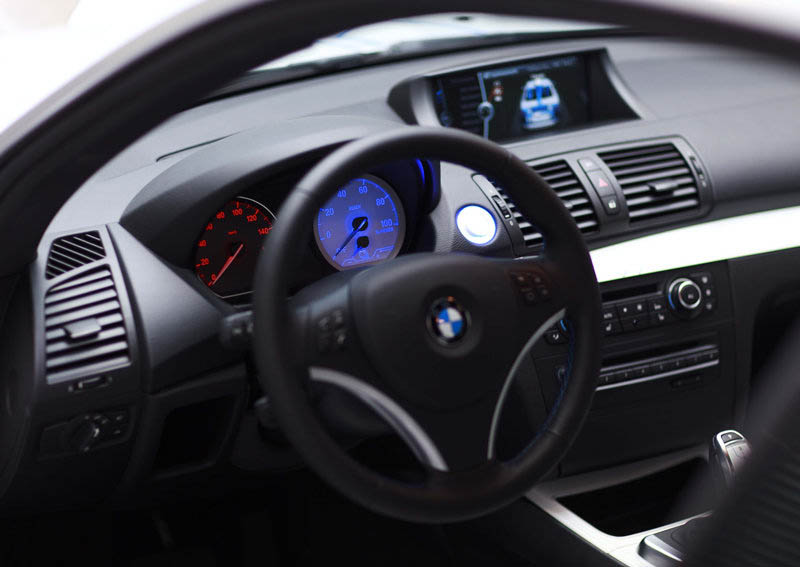
BMW 135i Coupe, 2010


BMW 135i Coupe, 2010

Starting immediately the BMW 135i Coupe and the BMW 135i Convertible come with a straight-six power unit of the latest generation for the first time combining BMW TwinPower Turbo Technology, High Precision Injection and fully variable VALVETRONIC valve management, all interacting with one another to set new standards for economy with the highest level of performance.

In conjunction with the seven-speed double-clutch gearbox (DKG) featuring Sport Automatic available as an option for the first time in the BMW 1-Series as of March 2010, these superior technologies offer a further significant reduction of fuel consumption and emissions on these top-flight performers, setting up new records in acceleration and dynamic performance.

The top engine featured in both versions of the BMW 1-Series develops maximum output of 225 kW/306 hp at 5,800 rpm from a capacity of three litres, combining spontaneous and direct response with unleashed free-revving driving qualities. Peak torque of the six-cylinder is 400 Newton-metres/295 lb-ft delivered from just 1,200 rpm all the way to 5,000 rpm.

The seven-speed double-clutch gearbox with Sport Automatic shifting gears without the slightest interruption in power and torque, is likewise designed and built for dynamic performance of the highest standard.

Sport Automatic offers not just the option to shift gears manually on the electronic gear selector lever or via the shift paddles on the steering wheel, but also the usual comfort and convenience of a BMW automatic transmission.

The combination of these two innovations in a compact car naturally guarantees driving pleasure of a new standard never seen before. Accelerating from 0 - 60 mph in just 5.0 and from 0 - 100 km/h in 5.2 seconds, the BMW 135i Coupe with its double-clutch gearbox offers the same supreme standard as a thoroughbred sports car even more than in the past.

A truly unique achievement in this performance class is average fuel consumption in the EU test cycle of 8.5 litres/100 kilometres (equal to provisional combined of approx. 22 mpg US), almost one litre/100 kilometres better than the comparable figure in the former model with its six-speed automatic transmission.

This significant reduction of fuel consumption, together with acceleration to 60 mph improved once again by 0.2 seconds, clearly confirms the progress made through BMW EfficientDynamics with this new engine and transmission technology.