Nice Automobiles, Luxury Car, Luxury Automotive, Elegant Car

Sunday, April 29, 2012

Buick Blackhawk Concept, 2001

 
Buick Blackhawk Concept, 2001

The Blackhawk is the ultimate expression of Buick. It has classic styling combined with contemporary proportions.

Retractable convertible with styling from the '30s

The Blackhawk is basically a 2-plus-2 convertible with a retractable top, and a body that looks like it came out of the late 1930s or '40s - because it did. Its face is a classic 1939 Buick grille, which has a pattern of fine vertical bars, and its major sheet metal combines the sleek bodies of 1941 and 1948 Buick Roadmasters.

All of this except the grille has been modified, and the final appearance - featuring black cherry paint, doors without handles and hidden headlamps - is of a streamlined yet retro head-turner that looks like it was created specifically for the Woodward Dream Cruise.

Blackhawk power: 463-hp V-8; 0-60 in under 5 seconds
The Blackhawk's performance goal is 0-60 miles per hour in under 5 seconds. Its powertrain is a 1970-vintage 455-cubic-inch Buick GS Stage III V-8 engine, heavily detailed and mated to the latest electronically controlled four-speed automatic transmission. The naturally aspirated, overhead valve, fuel-injected engine generates 463 horsepower at 4600 rpm and 510 lb-ft of torque at 4200 rpm.

Hand-made components
Many of the Blackhawk's major components are hand made, such as the frame, the unique carbon-fiber top and the retractable system that lowers the top into the trunk (leaving a small luggage area).

Other features include a fully independent suspension, remote keyless entry (so you can open the doors, which don't have exterior handles) and dual exhaust with three-inch pipes. The Blackhawk is equipped with 18-inch five-spoke alloy wheels (a style similar to those on uplevel Rivieras, Wildcats and Skylarks of '65) with high speed, Z-rated tires -- P295/35R18 on the front and P295/45R18 on the rear.

As an accent complementing the exterior design, a slightly different shade of dark cherry is used to create a "sweepspear" along the sides of the body. The sweepspear is a decoration that first showed up on some '49 Roadmasters and later became a shape sculpted into the sides of '50s Buicks. It's basically a horizontal line that sweeps in a downward curve along the doors toward the base of the leading edge of the rear fender, then kicks up over the rear wheel openings.

Emphasizes industry first for Buick: Lighted turn signals
While the Blackhawk looks to be from somewhere in time, it's hard to pin down where. Borrowed from the same 1939 Buick that donated the grille, a lighted logo device in the middle of the trunk exterior incorporates turn signals - a reminder that this particular '39 Buick feature was the industry's first production turn signal. Borrowed from contemporary technology, the Blackhawk is equipped with Global Positioning System navigation tied to a liquid crystal display screen.

And borrowed from a 1996 Buick Riviera - one of the most luxurious of all Buicks -- is the heavily modified Blackhawk interior. That includes buff color leather for the door trim and seats, plus design of the instrument panel and center console (though the wood-rimmed steering wheel is unique).
Even the name is borrowed. Buick introduced a subcompact Skyhawk for 1975 and the hawk symbol became an icon for the entire Buick line through the 1980s.

Buick 2-2 Bengal Roadster Concept, 2001


  •  Buick 2-2 Bengal Roadster Concept, 2001

Buick Has Uncompromising Beauty and Unique Function
Sporty Bengal is poised to become a prized possession
Roadster with Surprise Seating
The inside, Bengal's leather seating gives driver and passengers the feel of comfortable club chairs, said Lyon. Also, leather inserts grace the wood steering wheel.

Powerful V6 with Six-Speed Auto Transmission
Bengal owes some of its exceptional handling and sculptural exterior appearance to an innovative powertrain. Its supercharged, 3.4-liter V6 engine, which generates 250 horsepower, is transverse-mounted with the six-speed automatic transmission in front of it, rather than behind. This new drivetrain creates a shorter front overhang and a more rearward center of gravity that gives Bengal great handling on curves.

Voice Activated Controls, Head-Up Display
Quiet Servant, first shown on Buick's LaCrosse and Cielo concepts, is back -- featuring voice- activated controls from Visteon Corporation and a reconfigurable, color head-up display that shows gauges on demand. This enables the driver to control the car and its systems with voice commands or a four-position joystick on the steering wheel. As a result, the dashboard is simple and elegant and the driver operates the car with both hands on the wheel and eyes on the road.

Freed of the usual gauges and knobs, the entire dashboard is in fact one large flat-panel speaker from NXT Audio, anchoring Bengal's premium audio system. Altogether, there are five of these unobtrusive speakers which envelop the interior in audiophile-quality sound.

Lexus SC430 Pace Car, 201


Lexus SC430 Pace Car, 201

The Lexus SC series is a personal luxury coupé manufactured by the Toyota Motor Corporation under the Lexus brand and sold in Japan as the Toyota Soarer. The first generation, available as the SC 300 or SC 400 was in production from 1991 until July 7, 2000. A second-generation model, the SC 430, went into production in 2001.

The Lexus showcased its new sports convertible, the SC 430, at the Paris Motorshow in 2000, and the car entered production the following year. Power was provided by a 4.3 L 3UZ-FE V8 engine mated to a five-speed automatic transmission. This produces 0-60 runs around 6 seconds using the same engine found in the Lexus LS.

The Lexus designers from Europe and Japan worked together to create the convertible's sleek, streamlined design. The car features a retractable aluminium hardtop, all-leather interior, and 18 in alloy wheels. It can seat four and has a base price of US$63,825.

Competitors include the Mercedes-Benz SL-Class, Cadillac XLR, and Jaguar XK, and BMW 6-series.

Lexus LS430, 2001

 
Lexus LS430, 2001

The Lexus LS (sold as the Toyota Celsior in Japan, Australia, and some other countries.) is a V8-powered, rear wheel drive luxury car that serves as the flagship of Toyota's luxury Lexus division.

First generation (UF10)
UF10 I (1989)
The UF10 I LS 400 was produced from 1989 to 1994. The model introduced the Lexus nameplate to the US, and soon after won critical acclaim, becoming Wheels magazine's Car of the Year and earning a place on Car and Driver magazine's Ten Best list for 1990. The LS 400 was initially intended to be introduced as a standalone model for Lexus, but ultimately was sold alongside the ES 250, an entry-level luxury car that was based on the Toyota Camry.

UF10 II (1993)
For the 1993 model year, the LS 400 (now designated as the UF10 II) was introduced with larger brake rotors, standard passenger's side front airbags, larger wheels and tires, and numerous other upgrades.

Second generation (UF20)
UF20 III (1995)
Introduced in 1995, the UF20 III LS 400 was an evolutionary redesign of the LS and featured a new body that eliminated 300 lb from the previous car. The wheelbase was increased by 1.4 in, resulting in more interior and trunk space, yet the overall length of the car remained at 196.7 in. The durability of the brake system was improved as well.

The most noticeable cosmetic upgrades included a new front fascia with an increased gap between the headlights and grille, new headlights and taillights. The interior received a minor redesign with a more modern dashboard layout and the center console receiving a slight facelift.

UF20 IV (1998)
Lexus LS430
For the 1998 model year, the UF20 IV LS 400 was introduced. New interior amenities included retractable rear headrests, wood accents on the leather-bound steering wheel and gear selector, and a navigation system with a concealed antenna. A new "jam protection system" for the vehicle's windows was designed to reduce the risk of possible injury by preventing the windows from closing if an object came in between the window and the door frame. Door window controls were also added to the vehicle remote control.

Exterior updates included new five spoke wheels as well as redesigned rear view mirrors that reduced the amount of wind noise. The automatic headlights were now equipped with a delay feature that allowed the headlights to remain on while the occupants exited the vehicle.

The revised LS 400 featured Toyota's new 290 hp VVT-i UZ engine mated to a five-speed automatic transmission. The drivetrain improvements not only enabled the 3,890 lb sedan to accelerate from 0-60 mph in 6.5 seconds but also improved the vehicle's fuel economy.

Third generation (UF30)
UF30 I (2001)
For 2001, the UF30 I LS 430 was introduced. While previous LS redesigns were evolutionary, the 2001 update was a more thorough update of the model's exterior and interior. The UF30 had a completely redesigned suspension and a brand new 4.3 L engine generating 290 hp (216 kW) and 320 ft•lbf (434 N•m) of torque. Lexus claims the LS430 can run 0-60mph in 5.9 seconds. A three-inch wheelbase stretch resulted in more interior volume than the competing Mercedes-Benz S-Class and allowed the engine to be positioned farther rearward for better balance. Features such as Dynamic Laser Cruise Control, a DVD-based navigation system and heated & cooled seats became available. These and other features, such as sonar assisted parking, power rear seats with massage and a rear cooler were bundled in the 'Ultra Luxury Package.'

In the interior the most notable design changes included additional woodgrain trim on the dashboard and doors as well as the addition of an LCD screen on the center console. The exterior of the vehicle was completely new with the vehicle's dimensions increasing in terms of length and height.

UF30 II (2004)
The UF30 II was introduced in 2004. Lexus freshened the front & rear fascias and added as standard equipment previously optional features, such as a one-touch power moonroof, power rear sunshade, and lighted rear-seat vanity mirrors. Some features previously included in the Custom and Ultra Luxury packages became available separately. The transmission got an added sixth gear, and keyless 'smart access' and Bluetooth technology became optional, while a pre-collision system, similar to Mercedes-Benz's Pre-Safe, which used millimeter-wavelength radar to predict crashes and allow distance-aware cruise control, was added as an option. Other updates included different wheels, projector headlamps, and LED taillights.

The 2001 to 2006 LS 430 was the most reliable luxury sedan in the J.D. Power and Associates Initial Quality survey, and the early models of this series were the most reliable cars in the survey. In later studies of defects after 3 years of ownership, the LS 430 is also at the top of the pack. The third season of the popular BBC television program, Spooks, featured a number of Lexus LS vehicles as part of the brand's introduction in the British market.

Thursday, October 20, 2011

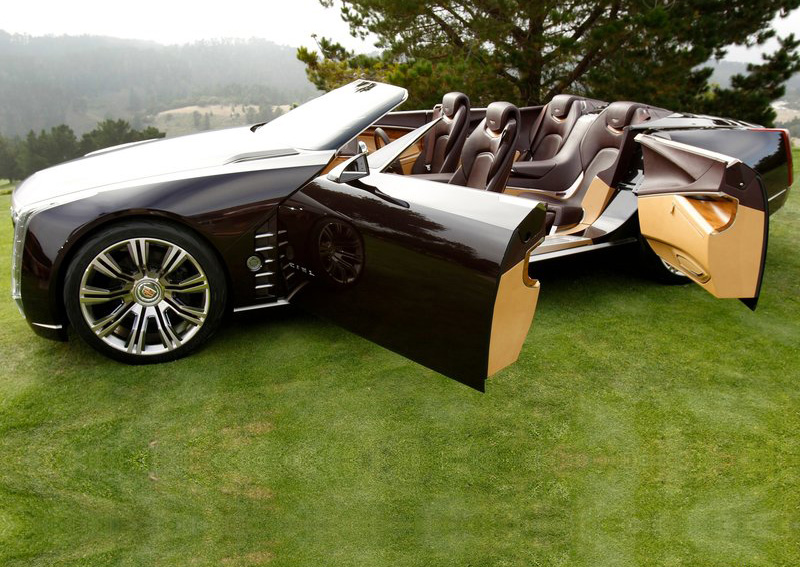
Cadillac Ciel Concept, 2011


Cadillac Ciel Concept, 2011

The Cadillac Ciel Concept - pronounced "C-L," the French translation for sky - is a four-seat convertible that opens a new chapter in Cadillac's design and product ascent, pushing the brand's Art & Science philosophy into a new stratum. Ciel is a new expression of Cadillac's historical grandeur, as well as a celebration of open-air motoring.
The spacious and elegant Cadillac Ciel Concept is a grand gesture that explores themes driving Cadillac's explorations into range-topping flagship luxury. It is powered by a twin-turbocharged version of the 3.6-liter Direct Injection V-6 engine, paired with a hybrid system using lithium-ion battery technology.

Coastal inspiration
Driving California's Highway 1 in an open car while the sun sets, from Big Sur north to Monterey, is the type of journey the Ciel team envisioned during its design.

The 4-door Cadillac Ciel Concept embraces the social aspects of a recreational journey, with generous room for two couples. It evokes the spirit of the classics with a long, low proportion. The doors are French-style, with the rear doors hinged at the rear - there is no B-pillar - to reveal a sweeping view of the dramatic interior. Distinguishing fender lines run from nose to tail, and nickel-plated bright work accents the body lines, enhancing the visual length of the car and honoring Cadillac touring cars of the past.

The Cadillac Ciel Concept's exterior flows seamlessly into the cabin, with the body color rolling over on top of the interior door panels. Like the exterior, the passenger space is accented with sweeping nickel-plated trim. It divides the body-color upper sections from a complementing beige lower color. Italian Olive wood, machined aluminum and hand-tipped leather are elements that flow through the interior, complementing the primary colors with warm, rich tones.
Cadillac Ciel Concept literally and figuratively reflects the driving experience along the California coastline. The Cabernet paint color, developed specifically for Ciel, is inspired by the rich translucence of a glass of red wine held up to the sunlight.

A prominent, polished aluminum windshield frame serves as in important structural element of the vehicle, as well as aesthetic one, recalling classic open cars of the past. Additional exterior cues, including a shield grille and vertical lighting elements, are pure Cadillac, but suggest a more organic interpretation of the brand's signature design language that emphasizes the artistic and natural sides of it. The body sides, for example, are more rounded, sweeping upward. Bright work is used to bring contrast to the deep paint color, but plays a more supporting role.

The car rides on large, beautifully finished wheels that feature brushed nickel plating over milled billet aluminum, matching the materials and appearance of other trim. Carbon ceramic brake rotors are visible behind the 22-inch rims, a visual clue to the Ciel's foundation of performance.
And owing to Cadillac's heritage of advanced technology, the headlamps and taillamps feature LED lighting elements - including a unique daytime running light graphic on the front of the vehicle that is generated with gradated LED lighting.

Elegant, authentic details
Simplicity, authenticity and spaciousness were the guiding principles when it came to developing the Cadillac Ciel Concept's interior.
A wheelbase of 125 inches - about 12 inches longer than a CTS sedan - provides generous space. Luxurious seats are bisected by a "floating" center console that runs from the instrument panel to the rear of the interior. It effectively creates a very personal space for each passenger and houses access to hidden connectivity portals for each person in the vehicle - allowing them to make dinner reservations, check the weather at their destination or even upload photos of the trip via social media sights.

Simplicity is also the watchword with the Cadillac Ciel Concept's instrument panel, which features a minimalist gauge cluster that doesn't impede or distract from the outward view. But while reserved in its form, it exemplifies Cadillac's attention to details and its priority on authentic materials. The climate vents, for example, are mostly hidden and their airflow is distributed indirectly.

Transparent gauges deliver their information within a detailed, brushed-aluminum housing that has the intricate depth of a high-quality chronograph. They offer dual readouts - analog and digital - as well as an information hierarchy. 
The interior features:
  •     Sloping bolsters on the seats that allow passengers to slide into the seats more comfortably
  •     A personal device storage area on the front of the console with inductive charging and Bluetooth connectivity
  •     A power-assisted transmission shifter that deploys as soon as the engine is started
  •     Lighting in the armrests that combines a natural light well for daytime driving and ambient lighting for nighttime drives
  •     Door storage areas that are inspired by premium fashion accessories and open with high-quality zippers
  •     Pull-out blankets are available for all three passengers and retract automatically
  •     All the seats have heating and cooling features, along with a drawer containing sun lotion, sun glasses and towels, as well as aromatherapy that is controlled from the rear armrest.

The defining element of the Ciel's cabin is the incorporation of Italian Olive wood on the doors, instrument panel, console and the front seatbacks, adding warmth and craftsmanship to a car designed to provoke an emotional response.
Italian Olive wood is a premium yet sustainable material and the material used in the Ciel came from a single fallen and recycled tree, from a west coast producer of premium olive oil. It was painstakingly prepared, including drying in a kiln, before it was cut for the concept vehicle. The numerous pieces were then photographed so that the grain could be matched precisely. Each component was hand-milled and finished by expert woodworking craftsmen.

The rear seating area is detailed with elegant flourishes. The rear seat passengers can pull a leather tab, which reveals a cashmere blanket that stretches across the seating area to ward off a chill. The wood trim in the rear center console opens to reveal a small humidor, stocked with a few cigars.
The Cadillac Ciel Concept was developed at GM Design's North Hollywood Design Center, which is managed by Frank Saucedo. Niki Smart was the lead exterior designer, with Buzyn leading interior development.

Cadillac CTS Coupe, 2011


Cadillac CTS Coupe, 2011

The 2011 Cadillac CTS Coupe, the latest and most dramatic of the brand's series of new designs to reach production. Slated to arrive in Cadillac showrooms in the spring of 2010, the Cadillac CTS Coupe is a new luxury sports coupe designed to become the centerpiece of the brand's revised lineup.
The Coupe joins the Cadillac CTS Sport Sedan, the 556-horsepower (415 kW) CTS-V and new CTS Sport Wagon as the foundation of Cadillac's lineup. A high-performance V-Series edition of the Coupe will also be released in 2010.

The Cadillac CTS Coupe's design carries over virtually unchanged from the concept car that was introduced at the North American International Auto Show in Detroit in 2008.
The Coupe is a classic 2+2 layout bolstered with advanced technology, such as a rear-view camera system and a performance-oriented suspension system coupled to rear-wheel or all-wheel drive.

Design
The Cadillac CTS Coupe emerged as a proposal inside Cadillac's design studio, where designers have developed and evolved the brand's Art and Science design philosophy.
The coupe has the same wheelbase as the CTS, but an overall height that is approximately two inches (51 mm) lower and an overall length that is two inches (51 mm) shorter.
Though it draws from its sport sedan sister, the Cadillac CTS Coupe shares only the instrument panel, console, headlamps, front fenders and grille. 

Key design features:
  •  Classic hardtop styling, with no conventional B-pillar
  •  Touch-pad operation for the doors removes the need for conventional door handles, creating a technical, clean profile
  •  A windshield laid at a faster angle (62.3 degrees) and a long, nearly horizontal backglass area combine to create a sleek, aerodynamic look
  •  Sculpted lower front fascia with unique brake-cooling vents
  •  Diamond cut-style rear fascia with mesh lower grilles
  •  Center-outlet exhaust with twin dihedral-shaped tips that pass through the rear fascia
  •  Signature vertical lighting, highlighted with LED light pipes
  •  Rear spoiler integrated into the center high-mounted stop lamp
  •  Sculpted roof-mounted antenna for OnStar and XM Satellite Radio

The shape of Cadillac CTS Coupe is refreshingly simple, yet amplified with intricately carved details. Distinctive and original Cadillac signature cues combine with hand-sculpted forms, artfully articulating the confidence of the chassis. For example, the rear fenders were purposefully developed by hand in Cadillac design studios to visually acknowledge the RWD powertrain. The gestured profile, coupled with Cadillac's vertical taillamps and pronounced rear centerline, aim to achieve the most visually confident coupe in the segment.

Performance
The Cadillac CTS Coupe extends Cadillac's emerging performance credentials. The Cadillac CTS Coupe's standard powertrain consists of a direct injected 3.6L V-6 and six-speed manual transmission. Direct injection technology delivers fuel more precisely to increase the efficiency of combustion, enabling more power while maintaining fuel economy and lowering emissions - including a 25-percent drop in cold-start hydrocarbon emissions.

The 3.6L DI engine is rated at 304 horsepower (227 kW) and offers EPA-estimated fuel economy of 27 mpg on the highway. It also runs on less expensive regular unleaded gasoline.

The powertrain's performance is channeled through a chassis that delivers sports car performance without punishment. The hardware includes an independent short/long arm ( SLA) front suspension system, with hydraulic control arm front bushings; and a multi-link rear suspension mounted on a fully isolated subframe. Also included are four-wheel disc performance brakes, premium steering and limited-slip differential.

2 suspension-tuning levels are available: a Performance Package with 18-inch wheels and all-season tires (available in both RWD and AWD,) and the Summer Tire Performance Package, with 19-inch tires and wheels and a higher level of road holding capability. StabiliTrak, the advanced electronic chassis control system, is standard.

The 304-horsepower (227 kW) 3.6L V-6 Direct Injection engine will be standard, equipped with a six-speed manual, featuring a revised clutch and dual-mass flywheel that offers better clutch pedal feel and improved engine isolation. A 6-speed automatic transmission with Driver Shift Control (and available steering wheel mounted shift buttons) is optional.

Technology
Cadillac CTS Coupe blends handcrafted luxury with a contemporary, driver-focused interior that supports the car's high-performance capabilities. The interior includes hand-sewn accents covering the door, center storage console and instrument panel trim. 14-Way adjustable Recaro sport seats, previously exclusively offered on Cadillac's V-Series model, will be offered on all Cadillac CTS Coupe models as an option.

The advanced technologies:
  •  Integrated iPod/MP3 capability
  •  40-gig hard drive, including the ability to store music and pause-and-replay live radio
  •  Pop-up navigation system
  •  Adaptive forward lighting system
  •  Bluetooth connectivity
  •  Standard Keyless Access and Smart Remote Start
  •  Rear Camera system
  •  Bose 5.1 Cabin Surround™ audio system 

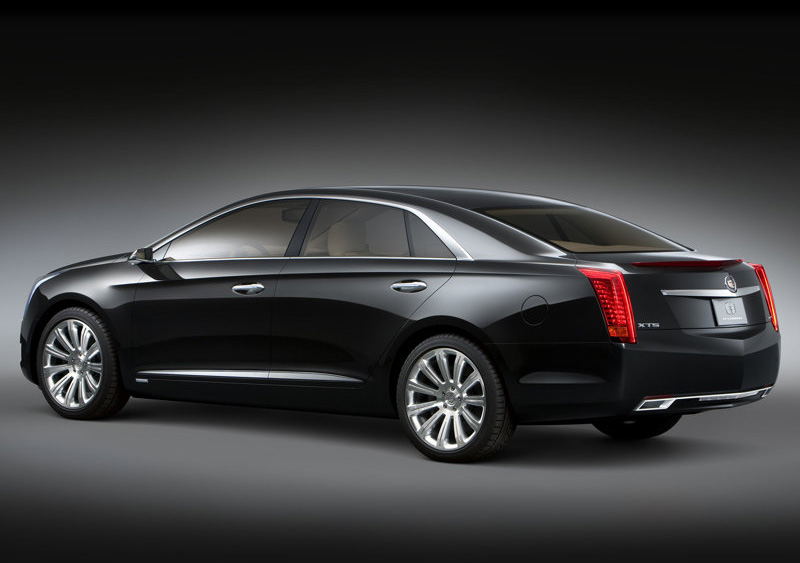
Cadillac XTS Platinum Concept, 2010


Cadillac XTS Platinum Concept, 2010

The Cadillac XTS Platinum Concept was designed from the inside out, re-imagining the luxury sedan as a personal headquarters, built for efficiency, luxury and connectivity. The concept introduces a new approach to in-car electronics that improves the form and function of the car's entertainment, navigation and information systems.

The Cadillac XTS Platinum Concept uses Cadillac's 3.6L V-6 Direct Injection gas engine, paired with a plug-in hybrid system. The plug-in technology enables the battery to fully charge from a standard electrical outlet, enabling pure electric propulsion in many driving situations, especially urban commutes in which fuel efficiency may double that of a conventional hybrid.

Traditional luxury sedans were defined by elegant interiors and Cadillac XTS Platinum Concept propels that formula into the future. It delivers new approaches to luxury within a design that combines fine craftsmanship with customer-driven innovation. Like the current Platinum Edition products, such as Escalade Platinum and the STS and DTS Platinum sedans, the interior is based on hand cut-and-sewn materials. The Cadillac XTS Platinum Concept injects more contemporary forms and themes into the interior design, including the use of Organic Light-Emitting Diode (O-LED) displays in place of traditional gauges and screens.

The concept previews a new integration philosophy guiding the development of future models with respect to in-car electronics. The intent is to progress Cadillac's intuitive in-car electronics systems, typified by the deployable touch-screen navigation system that has been highly acclaimed in the brand's CTS and SRX product lines. The Cadillac XTS Platinum Concept previews this strategy via the minimization of traditional buttons and switches. Designers blended the display screens into a flowing instrument panel. They call it a "dead front" design, because the panels appear black until the car is turned on and the screens illuminate. The instrument panel itself reflects the Cadillac XTS Platinum's other focus - uncompromising luxury and attention to detail on the interior.

The interior takes inspiration from nature, specifically the intricate layers of petals that combine to form an orchid. Cadillac designers translated that into a layered and detailed interior. Light cream is the cabin's primary color and is contrasted with darker elements, such as the steering wheel and an overhead console motif that runs the length of interior's roof. The console is made of a richly finished wood and houses lighting features.

Leather seats include a new style of automotive suede, with a laser-etched pattern. The patterned material adorns the center sections of the seats and accents the door trim. Thoughtfully detailed stitching is used throughout the interior, including the seats, instrument panel and door panels. Passengers in the spacious rear compartment of the Cadillac XTS Platinum Concept also have access to the car's connectivity feature, along with a range of infotainment choices.

A new proportion
The Cadillac XTS Platinum Concept has a distinctive proportion that transcends the traditional aesthetic of luxury sedans and carries the brand's Art and Science design in a more progressive manner. The unique proportion supports the "inside out" design priority, while creating a sleek profile that complements the car's advanced technology elements and necessary aerodynamics.

A sweeping profile culminates in a short, high deck lid that meets the Cadillac XTS Platinum Concept's aerodynamic needs - including a rear spoiler mounted on the deck lid, incorporating the center high-mounted stop lamp. A high, sloping beltline gestures the vehicle forward, suggesting motion, while the fenders flare outward wrapping tightly around 20-inch wheels and tires. The wheel-to-body proportion was carefully tailored to visually communicate the car's all-wheel-drive chassis.

The exterior elements are precisely tailored and elegantly detailed. Brushed billet aluminum trim is used selectively and the 20-inch, 11-spoke wheels feature a brushed aluminum face accented with bright inserts within the spokes. The wheels are wrapped with special Bridgestone tires that were created specifically for the Cadillac XTS Platinum Concept.

Signature elements essential to Cadillac's Art and Science design language include vertical headlamp and taillamps, with integrated light pipes and richly detailed lighting components. The headlamps feature light-emitting diode technology for bright illumination that requires less energy, as well as Cadillac's Adaptive Forward Lighting technology, which turns the headlamps with the direction of the front wheels for greater visibility in turns.

Purposeful and efficient performance
The Cadillac XTS Platinum concept's plug-in hybrid electric propulsion system (PHEV) builds on the experience Cadillac has gained with the Escalade Hybrid and Escalade Platinum Hybrid flagship models. The plug-in capability boosts the car's electric-only driving capability, offering additional battery energy capacity and enabling it to recharge from a standard external electrical outlet. The key benefit of external plug-in recharging is that in many situations - such as overnight parking - the battery can fully recharge in roughly five hours while the car is not in use. The plug-in system operates at maximum efficiency when operating on power the battery has drawn from the electric grid. In some conditions, such as urban commutes, drivers can experience efficiency that doubles that of conventional hybrids.

At higher speeds or when conditions demand it, such as brisk acceleration, a combination of engine power and electric power or engine power only, propels the vehicle. The combination of the Direct Injection V-6 engine and the PHEV system featuring fully electric variable drive provides a spirited driving experience. The system provides an estimated 350 horsepower (260 kW) and 295 lb.-ft. of torque (400 Nm).

Magnetic Ride Control (MRC) enables the Cadillac XTS Platinum Concept to deliver superior road-holding performance while maintaining luxury car composure in "regular" driving conditions. It uses shocks controlled by advanced magneto-rheological technology, rather than mechanical valves, to greatly accelerate response time and precision.
MRC uses electronic sensors at all four wheels to literally "read the road" every millisecond, making constant adjustments to damping to create virtually instantaneous and extremely precise control of body motions.

An advanced, specially calibrated all-wheel-drive system ensures optimal traction in wet and slippery conditions, and helps deliver maximum traction while cornering. Four-wheel disc brakes, with four-channel ABS, StabiliTrak stability control and full-function traction control complete the drivetrain details.

SPECIFICATIONS
  •  Vehicle type: luxury sedan concept
  •  Wheelbase: 111.7" / 2837 mm
  •  Length: 203.5" / 5170 mm
  •  Width: 74.8" / 1900 mm
  •  Height: 59.1" / 1500 mm
  •  Track:
          o front: 62.6" / 1589 mm
          o rear: 62.8" / 1594 mm
  •  Powertrain: plug-in hybrid system with 3.6L Direct Injection gas engine (with variable valve timing); lithium ion battery
  •  Suspension: four-wheel independent with Magnetic Ride Control.
  •  Brakes: four-wheel disc with electric park brake system
  •  Wheels: 20"
  •  Estimated power: 350 hp (260 kW) / 295 lb.-ft. (400 Nm)

Cadillac SRX, 2010


Cadillac SRX, 2010

The Cadillac unveiled the next-generation 2010 Cadillac SRX Crossover, featuring a completely new design and more-efficient, high-technology engine choices. The new Cadillac SRX is a mid-sized luxury crossover.

The 2010 Cadillac SRX is designed for efficient performance, including the choice of two high-tech six-cylinder engines that are new to Cadillac. A new, 3.0L direct injected and E85 capable V6 engine is standard and a new, 2.8L turbocharged V6 is optional. Both engines employ technology that helps produce strong performance that is typical of larger-displacement engines. Direct injection enables a 25-percent reduction in hydrocarbon emissions. Fuel economy in the mid-20s on the highway is expected, but testing isn't yet complete.

The performance and safety are enhanced by an available all-wheel-drive (AWD) system that is designed to optimize vehicle handling and stability in all driving conditions. The AWD system includes an advanced electronic limited-slip differential (eLSD) that distributes torque as needed from side-to-side along the rear axle, in addition from the front to rear axle. The pre-emptive, active-on-demand system provides an extra measure of capability in wet or icy conditions.
The 2010 SRX rides on a wide track that was designed to deliver a nimble, responsive driving experience. It seats five, with generous occupant and cargo room, and can tow up to 3,500 pounds (1,587 kg).

Distinctive design and craftsmanship
A multi-piece shield grille and Cadillac's iconic vertical headlamps - with light pipe technology and available adaptive forward lighting - are the face of the Cadillac SRX. They blend into a tightly wrapped, sweeping body that tapers downward at the rear, giving the vehicle a sporty profile, Dean said.

The Cadillac SRX features a wide stance, minimal overhang and wheels pushed to corners. Eighteen-inch wheels are standard and 20-inch wheels are offered. A bold accent line dives across the body side and culminates at a chrome front fender vent that incorporates a side marker lamp. An integrated spoiler on the rearward edge of the roof extends the sleek lines and improves aerodynamics.
An integrated center stack houses controls for climate and audio systems, while the navigation system rises from the center of the instrument panel. A signature example of the SRX's attention to detail is the Cadillac script logos in the front door sill plates that illuminate when the doors are opened.

Advanced technology and entertainment systems
The 2010 Cadillac SRX features numerous advanced electronic features. Highlights include a "pop-up" navigation screen featuring 3D imaging; adaptive forward lighting that swivels the headlamps in synch with vehicle steering; power liftgate with adjustable height setting; integrated hard disc drive for audio storage and a dual-screen system for rear entertainment.
Bluetooth compatibility is standard, as is OnStar's turn-by-turn navigation service for buyers who do not select the car's navigation system option.

Efficient performance
The Cadillac SRX is powered by a new, fuel-efficient direct injected 3.0L V6 that delivers an estimated 260 horsepower (193 kW) and is paired with a six-speed automatic transmission. Direct injection results in more power, better fuel economy and lower emissions, all will a smaller-displacement package. As a result, the new V6 engine is expected to raise the SRX's standard power rating by 5 horsepower, while achieving an estimated 10-q5-percent fuel economy improvement.

The 3.0L direct injection V6 is a smaller-displacement version of the 3.6L, direct injection engine featured in the Cadillac CTS sport sedan and named one of the world's 10 Best Engines for 2009 by Ward's Automotive. Along with direct injection technology, the 3.0-liter engine employs variable valve timing to optimize power and fuel efficiency and reduce emissions.
The Hydra-Matic 6T70 six-speed automatic transmission helps save fuel by lowering the engine's revolutions per minute at constant highway speeds, while a manual shift lever control enables greater driver interaction when desired. The new Cadillac SRX includes a driver-selectable "eco mode" that alters transmission shift points to maximize fuel economy.

The traction control is taken a step further on AWD models with the rear eLSD. In icy or wet conditions, the system can transfer up to 100 percent of torque to the wheel that has more grip. The eLSD also gives the driver enhanced control when cornering hard or completing a high-speed maneuver, such as a lane change, by momentarily applying more or less torque to either of the wheels to help the rear of the vehicle more closely follow the direction of the front wheels.
The suspension includes a real-time damping system in conjunction with AWD that adjusts shock damping rates in response to road conditions for smooth ride quality.

Enhanced safety
Cadillac SRX's safety features are designed to protect occupants before, during and after a crash. A strong body structure and chassis that absorbs crash energy is complemented by the use of martensitic steel in the fully enclosed rocker sections. Martensitic steel is one of the strongest available and its use in the rockers helps protect against intrusion during a side-impact crash, while also maintaining the structure during front and rear crashes.

Safety features include standard head curtain side airbags, standard front seat-mounted pelvic/thorax side airbags, front safety belts with dual pretensioners and load limiters, rollover mitigation sensors, a pedal release system, trailer stability assist and OnStar.
The Cadillac SRX was also designed to meet European pedestrian protection standards; and the front bumper is positioned for greater compatibility with car bumpers.